

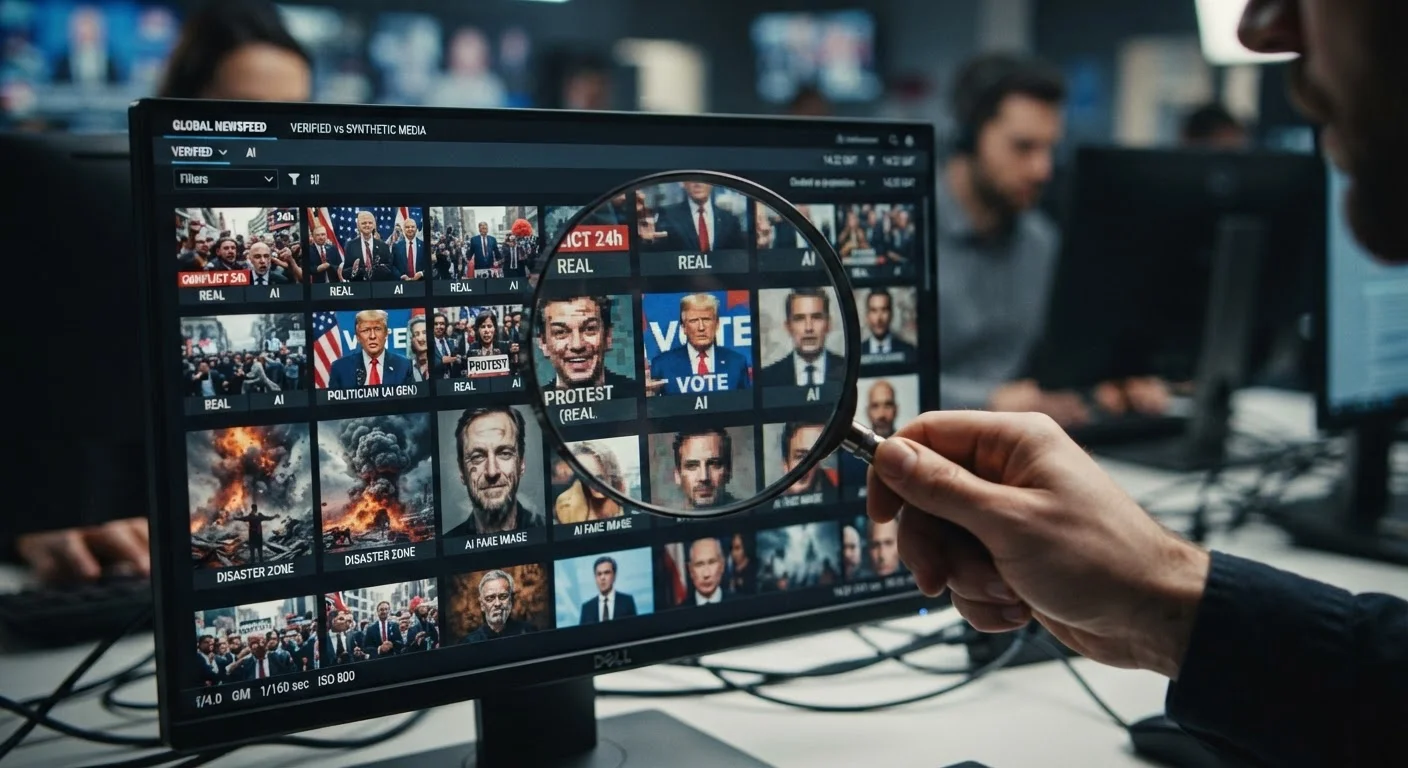
Why AI Misinformation Is a Different Kind of Problem
Misinformation isn't new, but the tools producing it have changed dramatically. Generative AI — the technology behind synthetic text, images, audio, and video — can now produce convincing content at a scale and speed that traditional fact-checking struggles to match. To understand what's really happening under the hood, our explainer on what generative AI actually does is a useful starting point.
What makes AI-generated misinformation particularly challenging is plausibility. A fabricated quote rendered in a familiar visual style, or a deepfake video of a public figure, can circulate thousands of times before a correction appears. The goal isn't to make you distrust everything — it's to sharpen the specific habits that catch the most common patterns before you hit share.
“The antidote to misinformation is not more information — it is better habits around how we encounter and share information in the first place.”
— Claire Wardle, Co-founder, First Draft News; misinformation researcher
Practical Habits for Evaluating Suspicious Content
Building a reliable personal verification routine doesn't require technical expertise. A few consistent practices, applied before sharing anything that seems surprising or emotionally charged, catch a large proportion of AI-generated fakes.
Pause before sharing anything that provokes a strong emotional reaction.
Emotional urgency — outrage, fear, disbelief — is frequently engineered into misleading content to short-circuit careful thinking. The stronger the reaction a post triggers, the more worthwhile it is to verify before amplifying. This applies equally to content that confirms your existing beliefs.
Trace content back to its original source before accepting it as real.
Screenshots, re-uploads, and cropped clips routinely strip out context that would reveal manipulation. Finding the original publication, broadcast, or post — and reading around it — often exposes the gap between what's claimed and what actually occurred.
Run reverse image searches on photos that seem too dramatic or perfectly timed.
Most major search engines offer reverse image search tools that can surface where an image first appeared and whether it has been used in different contexts over time. This single step debunks a significant share of recycled or AI-generated imagery.
Check whether credible, independent news outlets are reporting the same story.
Significant real events are rarely covered by only one obscure source. If a major claim appears only on unfamiliar websites or anonymous social accounts, the absence of corroborating coverage from established outlets is a meaningful signal — not proof of a cover-up, but a reason to hold judgment.
Examine video and audio for subtle AI artifacts before treating them as authentic.
Current deepfake technology frequently leaves detectable traces: unnatural eye blinking, lighting that doesn't match the environment, audio that sounds slightly desynchronized from lip movement, or background details that shift between frames. These clues aren't always obvious, but slowing down playback often makes them visible.
Quick Checks You Can Do Right Now
Some verification steps take less than a minute and require nothing beyond tools already available in your browser. Start here when something looks off.
No Detection Tool Is 100% Accurate
Automated AI-detection tools for text and images can assist verification, but none are definitively reliable. They produce both false positives (flagging real content as fake) and false negatives (missing sophisticated fakes). Use these tools as one input alongside human judgment and source verification — not as a standalone verdict. Researchers in this field consistently caution against over-relying on any single automated checker.
The Numbers Behind the Problem
Understanding the scale of AI-generated misinformation can sharpen your instincts for when to apply extra scrutiny. The data below reflects findings from researchers actively studying this space.
500,000+
Deepfake videos detected online annually
Researchers at Deeptrace (now Sentinel) documented exponential growth in synthetic video content circulating across platforms.
6x
Faster spread of false news vs. true news
A landmark MIT study published in Science found false news stories spread significantly faster and further than accurate ones on social media.
70%
Of people who encounter misinformation don't fact-check it
Research from the Reuters Institute for the Study of Journalism found that most readers take no active verification step before forming an opinion.
If you're also evaluating whether AI-powered apps deserve access to your personal data, the checklist in our guide on what to verify before trusting an AI app applies many of the same critical-thinking principles covered here.
When in Doubt, Don't Share Yet
The single highest-impact habit is also the simplest: if you're not sure something is real, hold off on sharing until you can verify it. Most misleading content depends on rapid spread in the first few hours. Waiting even 30 minutes — while a fact-check emerges or colleagues weigh in — dramatically reduces the chance you inadvertently amplify false information.
The content on this site is for informational purposes only and is not a substitute for professional advice. Always consult a qualified professional for guidance specific to your situation.