

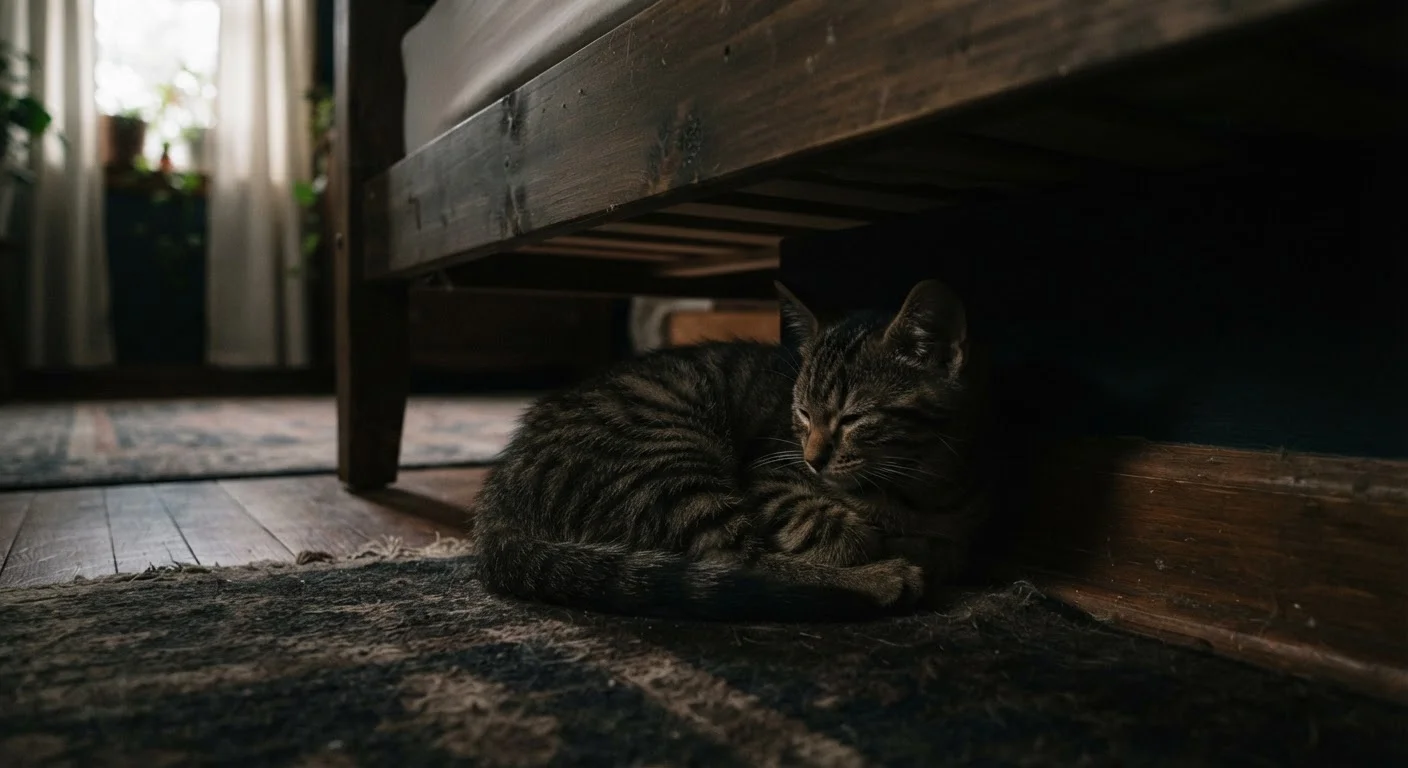
The Evolutionary Logic Behind Hiding
When a pet retreats to a closet, curls behind furniture, or stops seeking your company, it can feel like a behavioural quirk. In reality, it is often the quiet language of an unwell animal doing exactly what its biology tells it to do: disappear.
In the wild, showing weakness invites danger. A limping rabbit signals opportunity to a predator. A lethargic bird at the edge of a flock becomes a target. Over millennia, animals that were better at masking vulnerability survived in greater numbers, passing that instinct forward. Today's domestic pets carry those same genetic instructions, even in environments where no predator exists.
This matters for owners because it means a visibly sick pet is often a seriously sick pet. The behaviour you see — withdrawal, quietness, appetite loss — may represent only what the animal can no longer suppress. Understanding this gap between appearance and reality is what makes recognising subtle behaviour shifts so valuable before symptoms become obvious.
Domestic Comfort Doesn't Override Instinct
Even pets raised entirely indoors without exposure to predators retain the instinct to conceal vulnerability. This is not learned behaviour that can be trained away — it is hardwired. Owners should not interpret a pet's apparent 'okayness' as reliable evidence of good health, particularly in species known for strong illness concealment.
Species Differences Worth Knowing
Not all pets conceal illness in the same way, and knowing what is typical for your species — and your individual animal — sharpens your ability to notice when something is off.
- Cats are among the most accomplished concealers. They seek confined, elevated, or dark spaces when unwell and may reduce grooming or become unusually still.
- Dogs are more socially transparent but still suppress many pain signals. A dog that trails behind on walks, avoids jumping, or seems less enthusiastic about greeting rituals may be uncomfortable rather than simply tired.
- Rabbits, guinea pigs, and birds are prey species and will often mask illness until they physically cannot. Any change in a rabbit's gut motility, a guinea pig's eating pattern, or a bird's posture should be taken seriously and assessed promptly.
- Reptiles show illness very subtly and often only through prolonged inactivity or refusal to eat — patterns that require baseline knowledge to interpret correctly.
For a broader look at how animals communicate discomfort through body language, see what vets want you to know about pet body language.
“Animals are stoic by nature. What looks like calmness to an owner is sometimes an animal working very hard to appear normal. The absence of crying or visible distress does not mean the absence of pain.”
— Veterinary Pain Management Specialist, Board-certified veterinary specialist in animal pain assessment and management
Early Warning Signs That Precede Obvious Illness
Because pets rarely announce pain, owners need to become skilled at reading indirect signals. These are not dramatic — they are the small deviations from normal that easy to rationalise away.
~70%
Cats hide pain effectively from owners
Veterinary pain assessment studies suggest the majority of cats with confirmed painful conditions showed no obvious distress signals observable to owners at home.
48 hrs
Critical window for rabbit GI stasis intervention
Veterinary guidance generally indicates that gastrointestinal stasis in rabbits can become life-threatening within 24–48 hours if untreated, underscoring how quickly hidden illness can escalate in prey species.
- Location change: A pet that normally sleeps beside you but now retreats to a corner or unused room is communicating something. Location shifts are one of the earliest detectable signs.
- Appetite and thirst changes: A single skipped meal is not necessarily alarming. Consistent disinterest in food or water — or a sudden dramatic increase in either — warrants attention.
- Reduced social engagement: A dog that stops greeting you at the door, or a cat that no longer seeks lap time, may be conserving energy or managing discomfort. For more on signs a pet may be in pain without vocalising it, these quiet signals are central.
- Posture and movement: Hunching, stiffness, reluctance to climb, or an altered gait can all reflect physical discomfort even when a pet is not crying out.
- Grooming changes: Over-grooming a specific area can signal local pain or skin irritation. Neglected grooming in a cat that usually maintains itself suggests systemic illness.
Many of these signals overlap with stress responses — which is precisely why stress signals owners routinely overlook are worth understanding alongside physical health cues.
Build a Baseline for Your Pet
The most practical thing any pet owner can do is document what 'normal' looks like for their individual animal — eating patterns, resting locations, energy during walks, social habits. When something deviates from that baseline, you have a concrete reference point to share with your veterinarian, rather than relying on memory alone.
When Hiding Becomes an Emergency
While gradual withdrawal might allow a watchful wait of a day or two, certain signs alongside hiding require same-day or emergency veterinary care. These include:
- Laboured, rapid, or open-mouth breathing
- Inability to stand, walk, or maintain balance
- Seizure activity or sudden collapse
- Distended abdomen or visible straining without result (especially in cats and rabbits)
- Bleeding, obvious injury, or suspected poisoning
- No urination for more than 24 hours (cats in particular face urinary emergencies)
Do not attempt to self-diagnose or treat these situations at home. Contact a veterinarian or emergency animal hospital immediately. For a structured look at what responsible action looks like when a pet shows distress, see what responsible owners do when a pet is not thriving.
This article is for general educational purposes only and is not a substitute for professional veterinary advice, diagnosis, or treatment. Always consult a licensed veterinarian regarding your pet's specific health needs.
Frequently Asked Questions
Cats are both predators and prey in the wild, making vulnerability especially dangerous from an evolutionary standpoint. When unwell, they instinctively seek enclosed, quiet spaces to rest without exposure. This behaviour is not stubbornness — it reflects deep-rooted biology.
Dogs also conceal illness, though their social nature means they may still seek owner proximity even while hiding discomfort. Subtle signs like reduced tail wagging, slower movement, or unusual quietness are more common early indicators in dogs than outright hiding.
If hiding is accompanied by other signs — refusal to eat, laboured breathing, vomiting, or extreme lethargy — contact a veterinarian promptly rather than waiting. For milder withdrawal lasting more than 24 to 48 hours, a vet check is still advisable. When in doubt, call sooner.
Yes. Environmental changes, new animals, loud noises, or household disruption can all trigger hiding behaviour without any underlying physical illness. However, because stress and illness can look identical from the outside, veterinary assessment is the safest way to distinguish between them.
Prey animals — including rabbits, guinea pigs, birds, and reptiles — are especially prone to masking illness because any sign of weakness historically made them targets. Cats are also well known for this trait. Dogs tend to be somewhat less concealing but are far from transparent about pain.
Track food and water intake daily, note litter box or bathroom habits, and gently assess whether the pet responds to familiar stimuli like treats or their name. Document any changes and share them with your vet — even seemingly minor details can be clinically useful.
The content on this site is for informational purposes only and is not a substitute for professional advice. Always consult a qualified professional for guidance specific to your situation.