

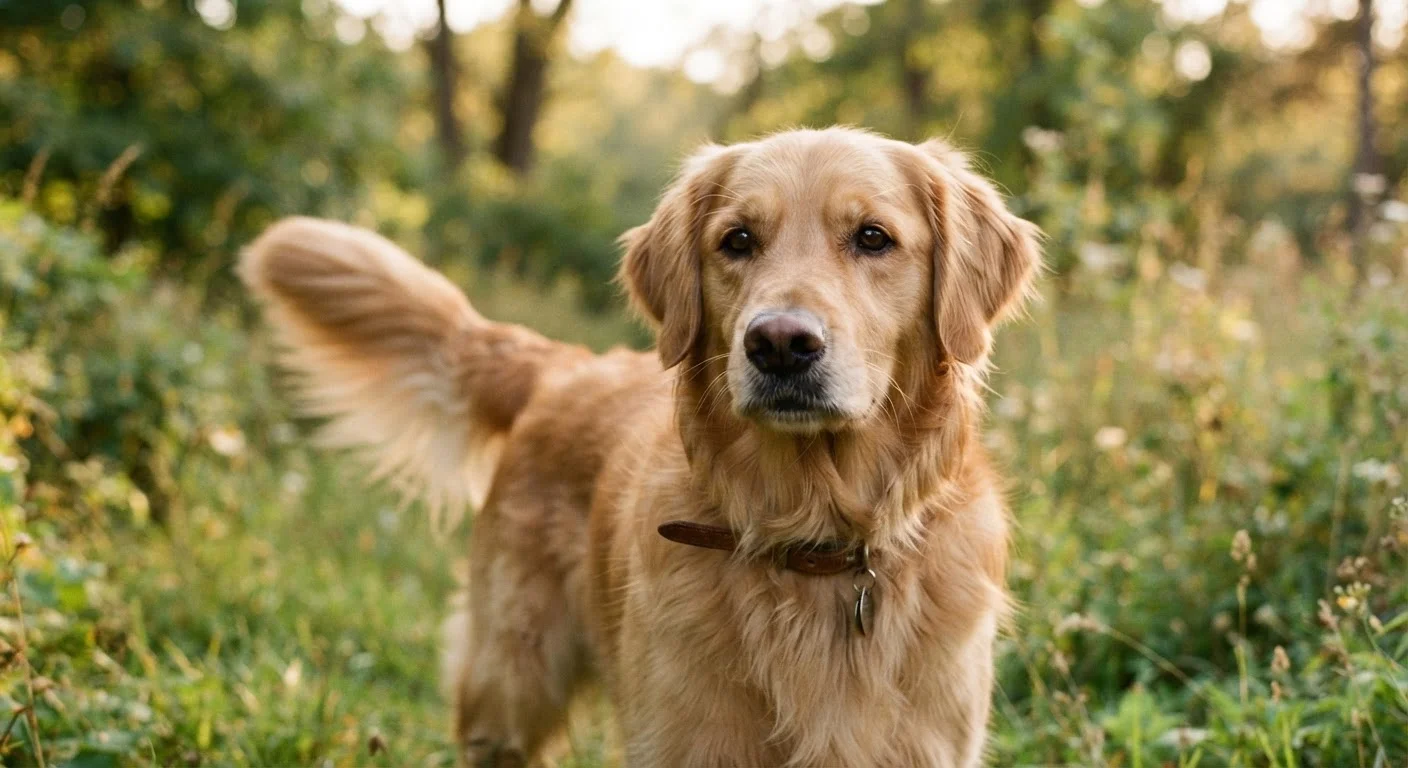
More Than a Wag: The Basics of Tail Signaling
Most people know that a dog's wagging tail signals something — but the assumption that it always means happiness is one of the most common misreadings in canine communication. Tail movement is better understood as an indicator of emotional arousal: the tail is active when the dog is engaged, excited, alert, or stressed. What that arousal means depends on several additional factors working together.
To begin decoding tail language, it helps to think of three separate variables: position (where the tail sits relative to the dog's spine), speed (how rapidly it moves), and direction (which side it favors). Each provides a distinct layer of information, and all three must be read alongside the dog's overall posture, ear set, and facial expression.
For a broader framework of how animals signal across multiple body systems, see this overview of animal communication.
Right vs. Left
Directional tail bias signals emotional valence
Research published in Current Biology found dogs wag rightward for positive stimuli and leftward for negative, with other dogs responding differently to each direction.
~30%
Dogs with docked tails face social misreading
A study in the journal Animal Behaviour found that dogs with shorter tails were more likely to be approached cautiously by other dogs, suggesting reduced signaling clarity.
Position and Height: Reading the Baseline
Every dog has a natural resting tail position determined by breed and anatomy — a beagle carries its tail differently than a greyhound or husky. Learning your individual dog's neutral position is the starting point for meaningful interpretation.
When the tail rises above the spine's neutral line, it generally signals increasing confidence, arousal, or assertiveness. A tail held very high and stiff — sometimes called a "flagpole" position — often accompanies high alert states and can precede aggressive behavior. By contrast, a tail held below the spine or tucked toward the belly signals submission, fear, or anxiety. A fully tucked tail is one of the clearest distress signals a dog can display.
A tail held roughly level with the spine in a relaxed, loose position typically indicates a calm, neutral emotional state. The key word is loose: stiffness at any height adds a layer of tension to the signal that changes its meaning significantly.
Speed, Direction, and the Nuance Owners Often Miss
Speed amplifies whatever emotional state the position already suggests. A slow, gentle wag from a mid-height tail often signals tentative friendliness or uncertainty — the dog is engaged but not fully comfortable. A broad, sweeping wag that moves the dog's entire hindquarters is associated with exuberant, relaxed excitement. A fast, tight wag from a high, stiff tail is a warning sign rather than an invitation.
Direction adds another dimension that most owners never notice. Scientific research has found that rightward-biased wags tend to correlate with positive states (seeing a familiar owner, for example), while leftward-biased wags appear during negative arousal (such as encountering an unfamiliar, dominant dog). Other dogs can detect and respond to this asymmetry, even if humans cannot without tools to measure it.
These signals rarely appear in isolation. A dog showing a tucked tail alongside yawning, lip-licking, or looking away is communicating layered discomfort. Our guide on stress signals owners routinely overlook breaks down how these calming signals work together.
When Tail Behavior Changes: Context and Health Considerations
Tail behavior that shifts noticeably — especially in a dog whose normal patterns are well established — deserves attention. A dog that suddenly holds its tail low, stops wagging in situations that used to excite them, or carries their tail differently than usual may be experiencing discomfort or pain. Conditions affecting the spine, anal glands, or muscles around the tail base can all alter how a dog carries and moves their tail.
This is worth taking seriously. If you notice persistent changes in your dog's tail posture or mobility without an obvious behavioral explanation, a veterinary consultation is a reasonable next step. For guidance on when behavioral changes may have a medical root, see signs your pet's behavior change may signal a health issue.
Building fluency in canine body language — including but not limited to the tail — is one of the most practical skills an owner can develop. It supports safer interactions, earlier recognition of stress, and a stronger, more attuned relationship with your dog. For a wider look at postural signals across the body, reading your pet's body language offers a helpful veterinary perspective.
This article is for general educational purposes and does not constitute veterinary or behavioral advice. If you have concerns about your dog's behavior or health, consult a licensed veterinarian or certified animal behaviorist.
Frequently Asked Questions
Not necessarily. A wag signals emotional arousal, which can be positive or negative. A stiff, high tail wagging rapidly alongside a tense body may indicate agitation or alerting behavior rather than friendliness. Always read the wag in context with the rest of the dog's body language.
A tucked tail — pulled down toward or between the hind legs — is a strong signal of fear, submission, or anxiety. It can also sometimes accompany pain. If your dog tucks their tail frequently or in new situations, consider consulting a veterinarian or certified behaviorist.
Research suggests that dogs wag more to the right when experiencing positive emotions and more to the left when feeling negative arousal such as stress or fear. This asymmetry reflects different hemispheric activity in the brain and is something other dogs can detect and respond to.
A tail held high and rigid often signals high arousal, confidence, or alertness — and can be a precursor to assertive or aggressive behavior. It should not be confused with a relaxed, gently elevated tail, which is more neutral.
Yes. Dogs with docked or very short tails have fewer expressive signals available, which can create miscommunication with other dogs. Studies suggest docked dogs may be approached more cautiously or misread more often by other dogs in social settings.
The content on this site is for informational purposes only and is not a substitute for professional advice. Always consult a qualified professional for guidance specific to your situation.