

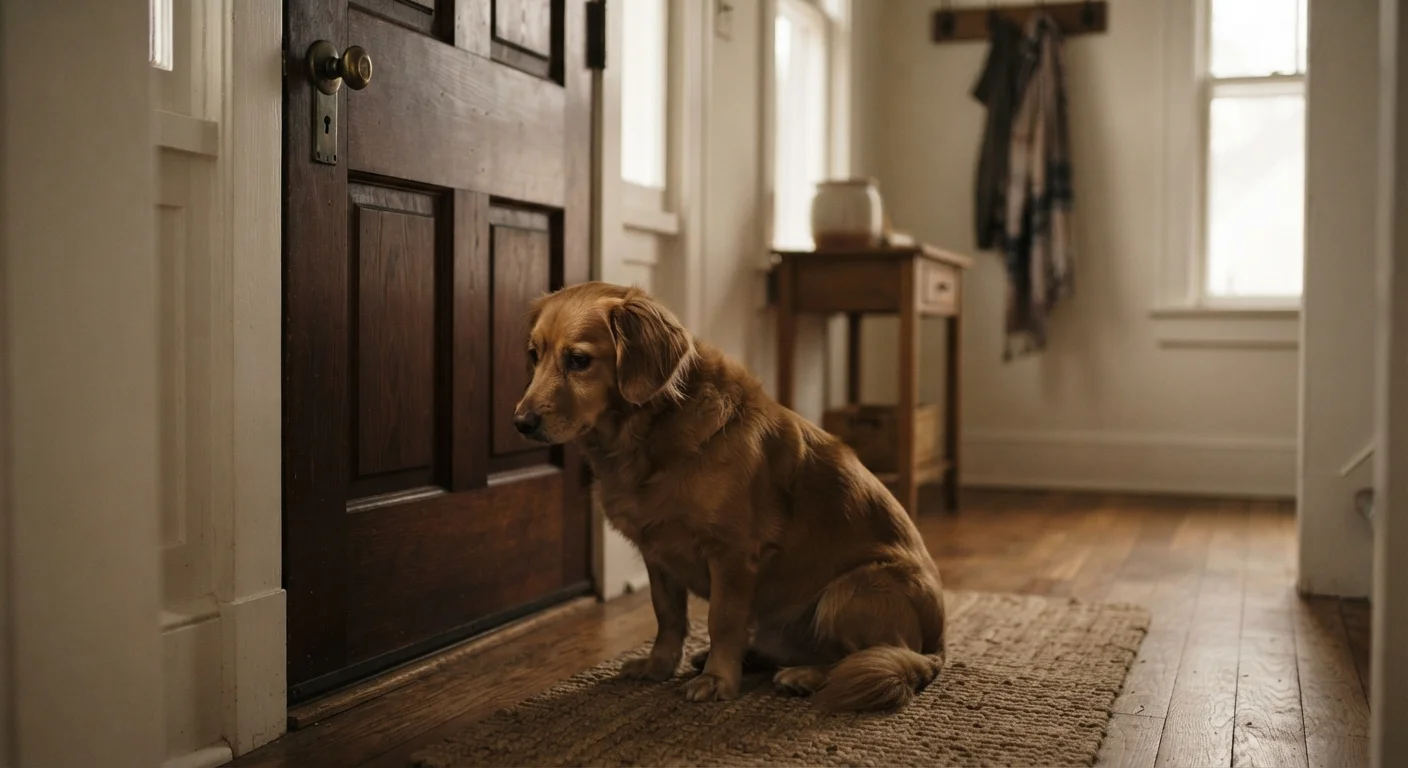
More Than Just Missing You
When a dog tears apart a couch cushion or howls for hours after an owner leaves, the instinct is often to label it a training problem. In reality, many of these dogs are experiencing a fear response — one that feels as overwhelming to them as a panic attack does to a person. Understanding the difference is the first step toward actually helping them.
Separation anxiety is among the most commonly reported behavioral concerns in dogs, and also one of the most frequently misread. Owners often assume the dog is acting out for attention or revenge. But dogs lack the cognitive architecture for spite. What looks like defiance is almost always distress. For broader context on how pets signal emotional difficulty, see our guide to stress signals owners routinely overlook.
17%
Estimated prevalence in U.S. dogs
Research published in the Journal of Veterinary Behavior suggests roughly 17% of dogs exhibit separation-related behaviors significant enough to be considered a disorder.
Top 3
Most common reason dogs are relinquished
Separation anxiety-related destructive behavior is consistently cited among the leading reasons owners surrender dogs to shelters, according to animal welfare researchers.
< 30 min
Typical onset of distress after departure
Behavioral studies indicate that dogs with true separation anxiety typically reach peak distress within the first 30 minutes of being left alone — often much sooner.
The Core Signs to Recognize
Separation anxiety presents in recognizable, consistent patterns. Unlike generalized misbehavior, these behaviors are almost exclusively tied to the owner's departure and absence. The most common signs include:
- Destructive behavior — chewing door frames, window sills, or personal items near exits
- Excessive vocalization — barking, howling, or whining that begins shortly after departure
- House soiling — urinating or defecating indoors despite being house-trained
- Escape attempts — scratching at doors, windows, or crates to the point of self-injury
- Hyper-attachment when you're home — following you from room to room, becoming distressed even when you're briefly out of sight
- Physiological signs — drooling, panting, or trembling in anticipation of departure
Timing matters here. True separation anxiety typically begins within 30 minutes of the owner leaving — often within the first few minutes. If your dog settles after an initial protest, the concern may be milder or situational rather than a clinical anxiety disorder.
What Drives the Anxiety
Dogs are highly social animals whose evolutionary history involved living in cooperative groups. Being isolated from their social group — in a domestic context, their human family — can activate a genuine alarm response in the nervous system. The dog isn't choosing to panic; their brain is registering a perceived threat.
Certain factors increase a dog's likelihood of developing separation anxiety. These include a history of rehoming or shelter stays, abrupt changes in routine, the sudden absence of a family member, or a lack of early independence training. Some breeds with strong human-bonding tendencies appear more prone, though any dog can be affected.
It's also worth noting that not every case of alone-time destruction indicates separation anxiety. Some dogs are simply under-stimulated or have learned that certain behaviors get a reaction. A sudden shift in behavior can also have a medical root — another reason a veterinary evaluation is often an important early step.
“Separation anxiety is not a behavior problem in the traditional sense — it is an emotional disorder. Treating it with punishment is like scolding someone for having a panic attack. The dog needs to learn that being alone is safe, and that takes time and structured support.”
— Karen Overall, Veterinary behaviorist and author of the Clinical Behavioral Medicine for Small Animals
How to Identify It — and What to Do Next
The single most useful diagnostic tool available to any owner is a camera. Setting up a phone or pet camera to record your dog's behavior in the first 30–60 minutes after you leave can reveal whether the distress is immediate and sustained — a hallmark of true separation anxiety — or intermittent and exploratory.
Once identified, the evidence-based approach to treatment centers on systematic desensitization: gradually and repeatedly exposing the dog to departures in a controlled way that keeps their anxiety below the threshold of panic. This might begin with stepping outside for 10 seconds and building duration slowly over days or weeks. The goal is to teach the dog, through repeated experience, that departures are temporary and safe.
This process takes patience and consistency, and moderate-to-severe cases genuinely benefit from professional support. A certified applied animal behaviorist (CAAB) or veterinary behaviorist can design a tailored protocol. For severe cases, a veterinarian may discuss whether medication could support the behavior modification process — the two approaches are often used together.
Understanding the full picture of how stress affects dogs is essential for any owner navigating this. Our article on how pets experience stress and what owners can do covers the broader landscape of canine emotional health.
This article is for general educational purposes only and is not a substitute for professional veterinary or behavioral advice. If your dog is showing signs of significant distress, please consult a licensed veterinarian or certified animal behaviorist.
Frequently Asked Questions
Boredom-related behavior tends to be random and inconsistent, while separation anxiety follows a clear pattern — distress begins when you leave and typically stops when you return. Video footage of your dog's behavior after departure is the most reliable way to distinguish between the two. A certified animal behaviorist or veterinary behaviorist can help you make a definitive assessment.
Yes. Sudden onset in a previously calm dog can be triggered by major life changes such as a move, the loss of a companion animal, a shift in the owner's schedule, or even age-related cognitive changes. If your dog's behavior shifts abruptly, a veterinary checkup is a wise first step to rule out medical causes.
Not reliably. A dog with true separation anxiety is distressed by the absence of their specific human attachment figure, not by being alone in general. Another pet may provide some comfort in mild cases, but it rarely resolves the underlying anxiety and should not be considered a primary treatment strategy.
No — and it often makes the situation worse. Because the behavior stems from an anxiety response rather than a deliberate choice, punishment after the fact only adds to the dog's stress without teaching an alternative behavior. Dogs lack the capacity to connect delayed punishment to a prior action.
Seek help from a certified applied animal behaviorist (CAAB), veterinary behaviorist, or a veterinarian if your dog is injuring itself, cannot be left alone for even a few minutes, or if the behavior is not improving with basic management strategies. Some cases benefit from a combination of behavior modification and medication.
The content on this site is for informational purposes only and is not a substitute for professional advice. Always consult a qualified professional for guidance specific to your situation.