

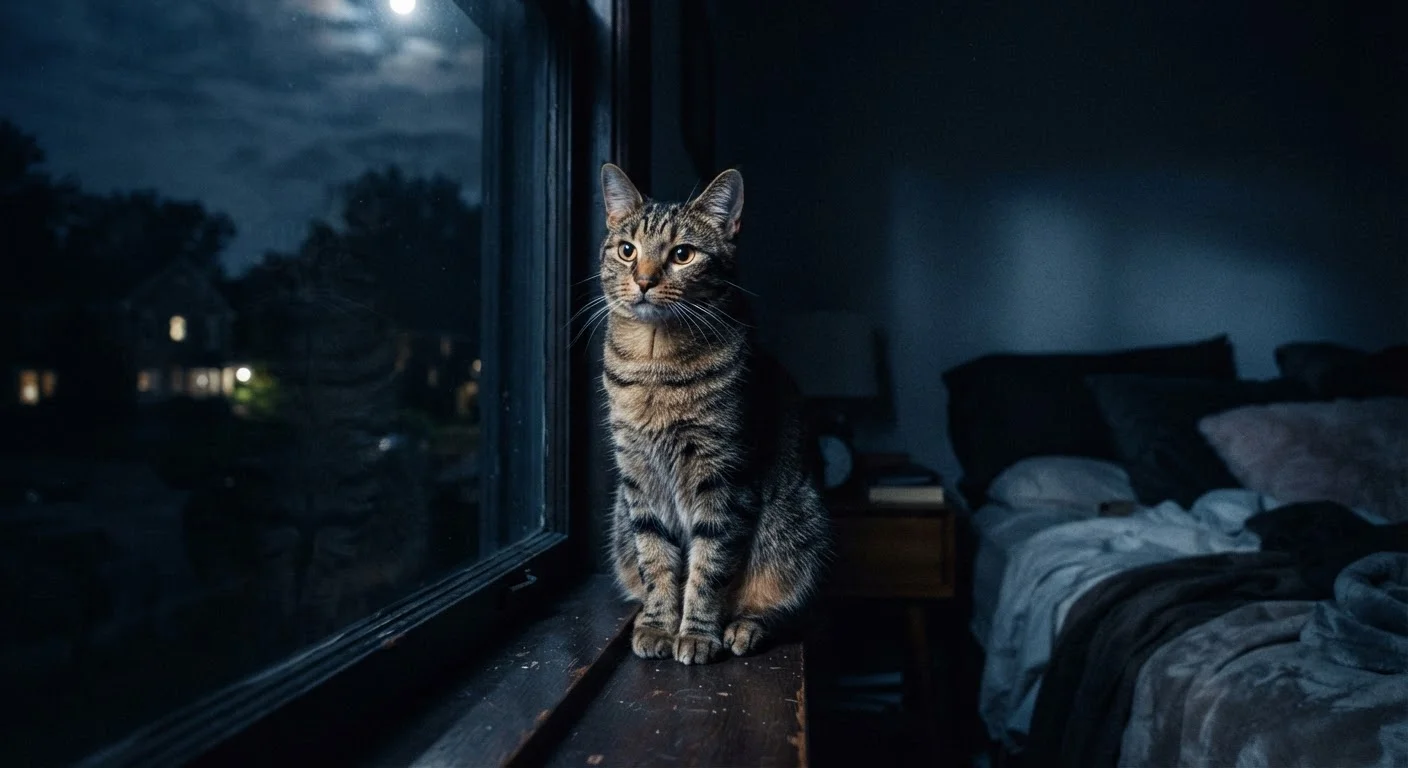
Why Cats Are Wired for Low-Light Hours
The domestic cat (Felis catus) descends from desert-dwelling ancestors whose prey — rodents, birds, and insects — were most active at dawn and dusk. Natural selection rewarded cats with sensory hardware perfectly suited for those hours: a reflective eye layer called the tapetum lucidum that amplifies dim light, vertically slit pupils that adjust rapidly to changing brightness, and sensitive whiskers that detect movement in near-darkness.
This evolutionary heritage is why your cat can navigate a pitch-black hallway without bumping into a wall — and why it feels the biological urge to do exactly that when you are trying to sleep. Understanding this as biology, rather than misbehavior, is the first step toward a more realistic and compassionate response.
Crepuscular vs. Nocturnal: A Useful Distinction
Many people assume cats are fully nocturnal, but behavioral research places most domestic cats in the crepuscular category — with activity peaking around dawn and dusk rather than throughout the night. Individual cats can shift their patterns significantly based on household schedules, light exposure, and enrichment, which is why behavior varies so much between households.
To learn more about how cats communicate through posture and movement during these alert states, see our guide to cat body language.
What Happens Inside a Cat's Body at Night
Cats do not have a single long sleep-wake cycle the way most humans do. Instead, they cycle through many shorter periods of rest and activity across 24 hours, with energy peaks biased toward low-light conditions. Hormones and internal circadian rhythms — influenced by light exposure, temperature, and food availability — govern this pattern.
Indoor life removes the natural environmental cues that would otherwise calibrate these rhythms precisely. Without the gradual fade of natural dusk or a genuine hunting opportunity, a cat's activity window can shift or feel more erratic. This is compounded when owners are absent during the day, leaving cats under-stimulated for hours before their biological prime time arrives.
12–16 hrs
Average daily sleep for adult domestic cats
According to veterinary sleep research, cats conserve energy through frequent, distributed rest periods rather than consolidated overnight sleep.
~6x
Greater low-light vision sensitivity than humans
Feline visual anatomy, including the tapetum lucidum and high rod-cell density, gives cats substantially superior vision in dim conditions compared to people.
Practical Strategies for a More Restful Household
While you cannot reprogram millions of years of evolution, you can work with your cat's biology rather than against it. Veterinary behaviorists commonly recommend a structured play-feed-rest sequence in the evening:
- Structured play: Spend 10–15 minutes in active, predatory-style play — wand toys or feather lures that mimic prey movement — in the hour before your intended bedtime.
- Feeding after play: Offer the main evening meal or a portion of daily calories immediately after play ends. This echoes the natural hunt-catch-eat-groom-sleep cycle.
- Quiet wind-down: Dim household lights and reduce noise to signal that the active period is closing.
Environmental enrichment throughout the day also matters. Puzzle feeders, window perches with outdoor views, and rotating toys give cats appropriate outlets for curiosity and hunting instinct so they arrive at evening less pent-up. For households with multiple cats, note that territorial dynamics can also heighten nocturnal tension — our article on territorial behavior in cats offers useful context.
Try the Hunt-Catch-Eat Sequence
Mirroring a cat's natural predatory cycle before bed — active wand-toy play followed immediately by a measured meal — is one of the most effective ways to encourage restful nighttime behavior. Consistency matters more than duration; even ten focused minutes of interactive play makes a meaningful difference over time.
When to Consult a Veterinarian
A baseline of nighttime activity is entirely normal and expected in healthy cats of any age. The situations worth flagging to a veterinarian include: a sudden and dramatic increase in nighttime vocalization; apparent disorientation or repetitive pacing; signs of distress or pain; or marked behavioral changes in cats over ten years old, which can point to hyperthyroidism, hypertension, or feline cognitive dysfunction syndrome.
Early veterinary evaluation for these presentations is important. A cat that was previously calm at night and has become consistently disruptive deserves a health check before any behavioral modification is attempted.
This article provides general educational information about feline behavior and is not a substitute for professional veterinary advice. If you have concerns about your cat's health or behavior, consult a licensed veterinarian.
Frequently Asked Questions
Your cat's internal clock is tuned to hunt during low-light hours, which in the wild would be dawn and dusk. In a home without natural light cues, that urge can spill into the middle of the night. Insufficient daytime activity is often a contributing factor.
You can encourage calmer nighttime behavior through structured play and feeding schedules, but you cannot fully override your cat's crepuscular biology. Consistency and environmental enrichment tend to yield the best results over time.
Routine nighttime energy is normal for cats. However, a sudden increase in vocalization, restlessness, or disorientation — especially in older cats — can signal pain, hyperthyroidism, or cognitive changes. Contact your veterinarian if behavior shifts noticeably.
Feeding can actually help. A small meal after an evening play session mimics the hunt-catch-eat sequence cats are wired for, which often leads to natural grooming and rest afterward.
Generally, yes. Senior cats tend to sleep more overall, though some older cats experience increased nighttime confusion — a veterinarian can help distinguish normal aging from medical concerns.
The content on this site is for informational purposes only and is not a substitute for professional advice. Always consult a qualified professional for guidance specific to your situation.