

Start here
Why Nutrition Feels Complicated (And Why It Doesn't Have to Be)
Core concepts
The Big Three: Macronutrients Explained Simply
Go deeper
Micronutrients: The Small Stuff That Matters
Apply it
Food Quality vs. Calorie Counting
Put it together
Building Balance Without Obsessing Over Perfection
Why Nutrition Feels Complicated (And Why It Doesn't Have to Be)
Nutrition is one of those topics where the more you read, the more confusing it can get. One source praises a food; another vilifies it. Terms like "glycemic index," "antioxidants," and "bioavailability" pile up fast. If you've felt paralyzed by the noise, you're not alone — and you're not behind.
The truth is that the scientific foundation of good nutrition is more stable than headlines suggest. Much of the confusion comes from misapplied research, oversimplified marketing claims, and the reality that nutrition studies are genuinely difficult to conduct. For the everyday reader, this means that the practical basics — eat a variety of whole foods, stay hydrated, don't rely heavily on processed foods — hold up remarkably well over time.
This guide doesn't prescribe a diet or tell you what to eat. It introduces the core concepts so you can read food labels, evaluate nutrition claims, and make more informed choices for yourself. For a deeper end-to-end resource, see our complete nutrition resource.
Macronutrient
A nutrient the body needs in large amounts for energy and basic functions. The three macronutrients are carbohydrates, protein, and fat.
Micronutrient
A vitamin or mineral needed in small amounts to support essential body processes like immunity, bone health, and metabolism.
Nutrient density
A measure of how many useful nutrients a food provides relative to its calorie content. Foods with high nutrient density deliver a lot of vitamins, minerals, and fiber per calorie.
Ultra-processed food
Foods made from industrial formulations that go well beyond basic cooking — typically containing many additives, refined ingredients, and very little whole-food content.
Dietary fiber
A type of carbohydrate the body cannot fully digest. Fiber supports digestive health, helps regulate blood sugar, and contributes to feelings of fullness.
Whole food
A food that is close to its natural state and minimally processed — such as vegetables, fruits, legumes, and whole grains.
The Big Three: Macronutrients Explained Simply
Every food you eat contains some combination of three macronutrients — carbohydrates, protein, and fat. Each provides energy and serves distinct biological roles.
- Carbohydrates are the body's preferred fuel source, especially for the brain and muscles during activity. They include sugars (simple carbs) and starches and fiber (complex carbs). Whole grains, legumes, fruits, and vegetables are carbohydrate-rich foods that also supply fiber and micronutrients.
- Protein is essential for building and repairing tissues, producing enzymes and hormones, and supporting immune function. Sources include meat, fish, eggs, dairy, legumes, tofu, and nuts.
- Fat supports cell membrane structure, fat-soluble vitamin absorption (vitamins A, D, E, and K), and hormone production. Not all fats behave the same way — unsaturated fats from foods like olive oil, avocado, and fatty fish are associated with favorable health outcomes, while excessive saturated and trans fats are linked to increased cardiovascular risk.
No macronutrient is the enemy. Extreme restriction of any one of them without medical guidance is generally not recommended. For a visual, practical way to think about how these fit on your plate, the plate model framework is a useful next step.
An Easy Way to Think About Macros
You don't need to weigh or measure macronutrients to eat well. A practical rule of thumb: aim for most of your plate to include vegetables and a whole grain or starchy food, a portion of protein, and a small amount of healthy fat from ingredients like olive oil, nuts, or avocado. This rough structure covers all three macronutrients without requiring any calculation.
Micronutrients: The Small Stuff That Matters
Vitamins and minerals are called micronutrients because the body needs them in comparatively small amounts — but their impact is significant. They regulate virtually every physiological process, from bone formation (calcium, vitamin D) to red blood cell production (iron, folate) to immune defense (zinc, vitamin C).
Unlike macronutrients, micronutrients provide no calories. They work as cofactors — enabling the chemical reactions that keep your body functioning. A shortage of even one can have measurable health consequences over time.
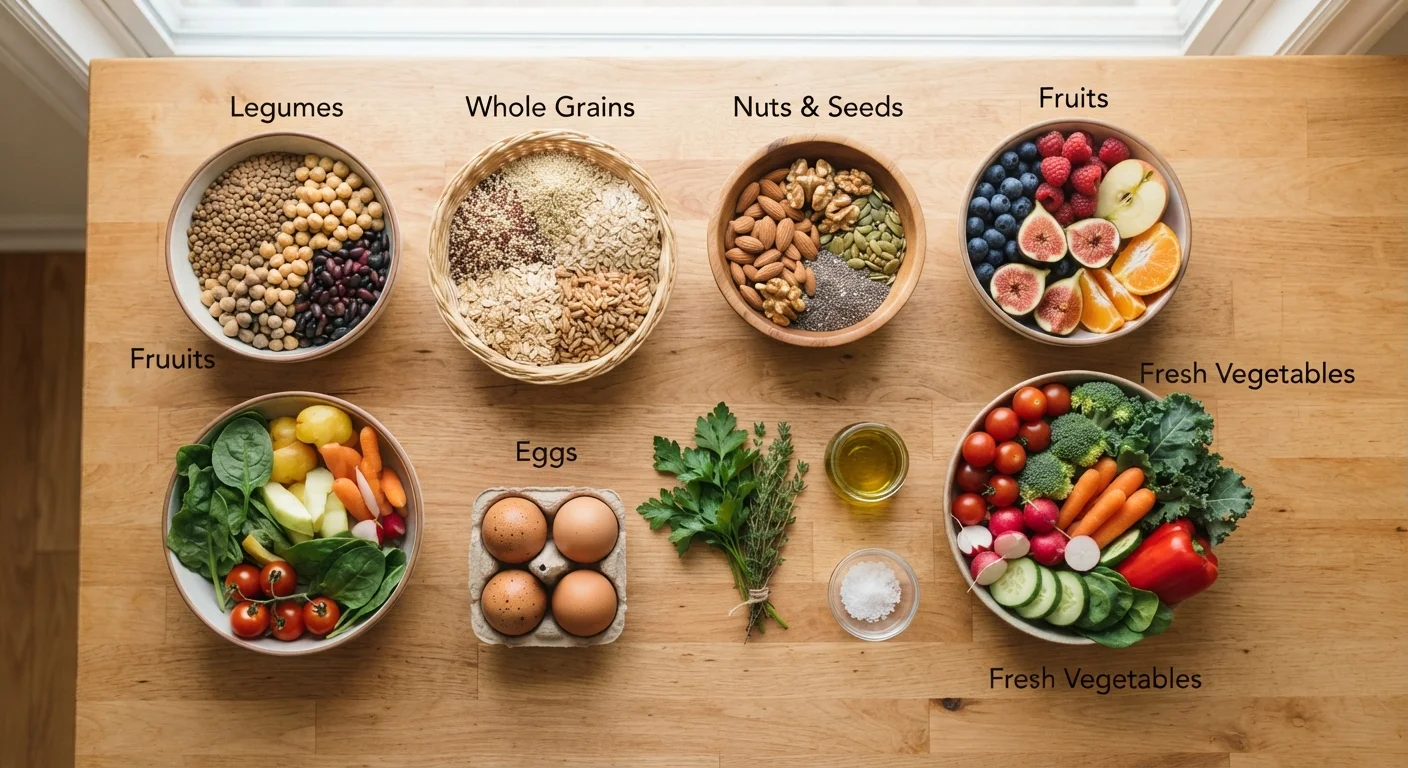
The most reliable way to meet micronutrient needs is through dietary variety. Eating a wide range of vegetables, fruits, whole grains, legumes, and protein sources is far more effective than relying on supplements alone. While supplements can address documented deficiencies, they are generally not equivalent to whole foods, which deliver nutrients alongside fiber and other compounds that may influence how those nutrients are absorbed and used. Always consult a healthcare provider before starting any supplement regimen.
Supplements Are Not a Nutritional Safety Net
Vitamin and mineral supplements are designed to address specific deficiencies, not to replace a varied diet. Whole foods deliver nutrients alongside fiber, water, and other naturally occurring compounds that interact in ways supplements cannot fully replicate. If you're concerned you may be deficient in a particular nutrient, a blood test ordered by a healthcare provider is the most reliable starting point.
Food Quality vs. Calorie Counting
Calories are a unit of energy, and they matter — but they tell only part of the story. Two meals with identical calorie counts can have very different effects on hunger, energy levels, and nutrient intake, depending on what those calories come from.
Research broadly supports prioritizing food quality as a primary strategy. Whole, minimally processed foods tend to be more nutrient-dense and more satiating per calorie than heavily processed alternatives. Ultra-processed foods — those engineered for palatability with added sugars, refined grains, excessive sodium, and artificial additives — are associated in population studies with less favorable health outcomes over time.
This doesn't mean that occasional processed foods are harmful or that every ingredient label requires scrutiny. Learning to read food labels is a genuinely useful skill, though. The guide to reading nutrition labels can help you interpret serving sizes, daily value percentages, and ingredient lists without getting overwhelmed. And if you want to understand where well-intentioned food choices can still go sideways, common grocery store missteps is worth a read.
Building Balance Without Obsessing Over Perfection
A balanced eating pattern is not about flawless daily execution. It's about the overall shape of your diet across days and weeks — consistent variety, adequate vegetables and fruit, sufficient protein, and room for flexibility without guilt.
Sustainable nutrition habits tend to share a few qualities: they're built gradually, they account for real-life constraints (budget, time, preference, culture), and they leave space for foods eaten purely for enjoyment. Rigid all-or-nothing approaches often backfire; the research on dietary adherence consistently finds that flexibility supports long-term success better than strict rules.
Nutrition and physical activity also support each other. If you're thinking about building healthier habits more broadly, getting started with movement pairs naturally with this introduction. Similarly, food choices and mental wellbeing are closely connected — the everyday mental health primer offers a complementary foundation.
This article is general health information and education, not individualized dietary advice. For guidance tailored to your health history, goals, or any specific conditions, a registered dietitian or your primary care provider is the right resource.
This article is for informational purposes only and does not constitute medical or nutritional advice. Always consult a qualified healthcare professional before making significant changes to your diet or lifestyle.
Frequently Asked Questions
No single nutrient outranks others — your body needs a mix of macronutrients and micronutrients to function well. For most beginners, the most useful starting point is simply increasing the variety and quality of whole foods eaten, rather than zeroing in on any one nutrient.
Not necessarily. Research consistently shows that emphasizing food quality — plenty of vegetables, whole grains, lean proteins, and healthy fats — supports good health without requiring precise calorie tracking. Calorie awareness can be useful in some contexts, but it is not essential for everyone.
Macronutrients (carbohydrates, protein, and fat) are needed in large amounts and provide the body with energy. Micronutrients (vitamins and minerals) are needed in smaller amounts but are equally essential — they support processes like immunity, bone health, and nerve function.
Carbohydrates are not inherently harmful. They are the body's primary energy source and include fiber-rich whole grains, fruits, and vegetables. The quality and quantity of carbohydrates matters more than whether you eat them at all.
A balanced diet generally includes a variety of vegetables, fruit, whole grains, protein sources (plant or animal), and healthy fats across meals over the course of a day or week. It does not mean every single meal must be perfect. A registered dietitian can offer personalized guidance.
For most people eating a reasonably varied diet, supplements are not a substitute for whole foods. Some populations may benefit from specific supplements, but this is a decision best made with a healthcare provider who can assess your individual needs.
The content on this site is for informational purposes only and is not a substitute for professional advice. Always consult a qualified professional for guidance specific to your situation.