

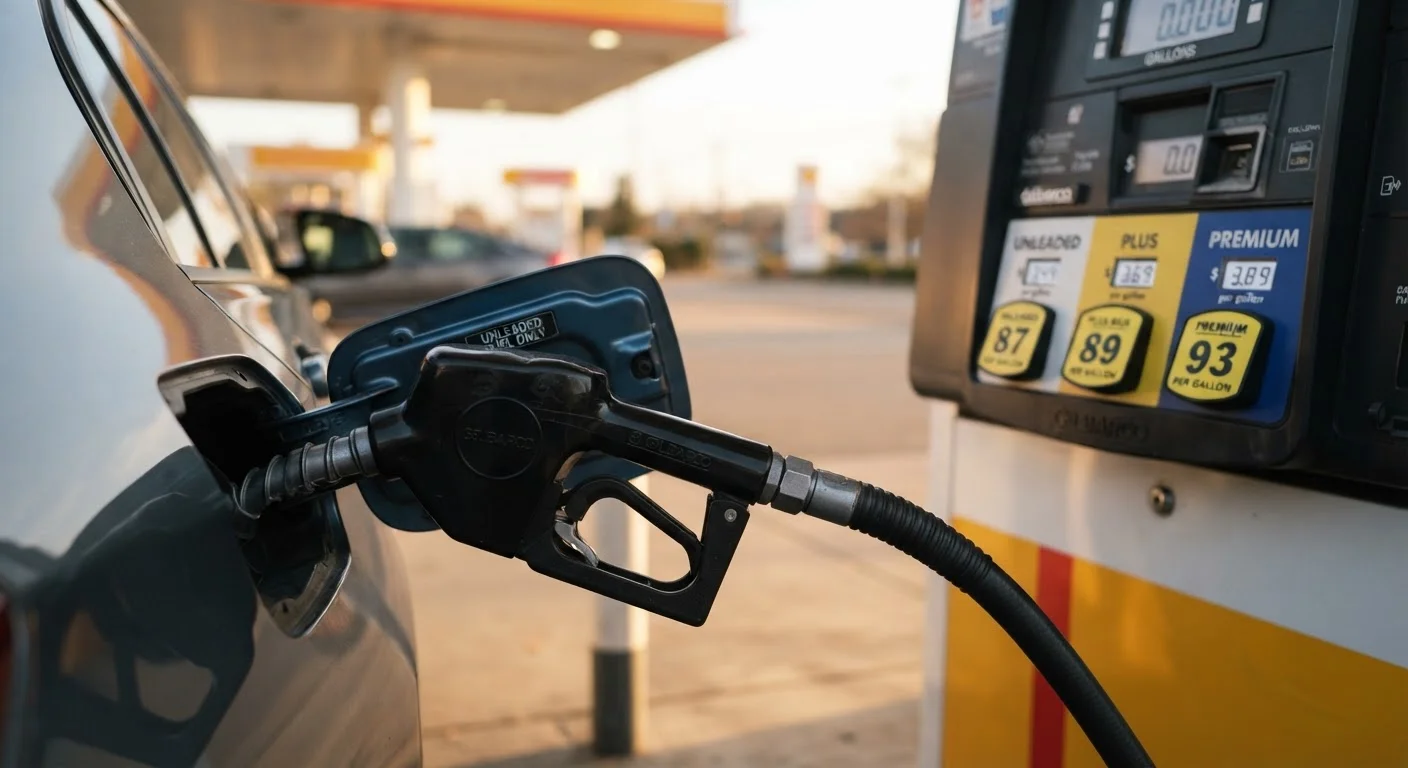
Why the Premium Fuel Myth Persists
Walk into any gas station and the logic seems intuitive: premium means better. Marketers lean into the word, prices signal quality, and plenty of drivers assume more expensive fuel must translate to a smoother, more powerful ride. But fuel grade is an engineering specification, not a quality ranking — and applying premium to the wrong engine is simply burning extra money.
The confusion is understandable. Some vehicles genuinely do benefit from higher-octane fuel, and those positive experiences get shared. The problem is generalizing them to every car on the road. Understanding what octane actually measures cuts through the noise quickly.
Myth
Premium fuel makes any car faster and more powerful, regardless of engine type.
Fact
Higher octane fuel only improves performance in engines specifically designed or tuned to use it.
Octane rating measures a fuel's resistance to engine knock — the premature ignition of the air-fuel mixture that can damage high-compression engines. If your engine runs on regular 87-octane fuel, its combustion timing is calibrated for that grade. Putting in 91 or 93-octane premium doesn't give the engine extra energy to burn; the fuel contains roughly the same energy density. Any perceived power difference is typically placebo. Check your owner's manual: if it says "regular unleaded," premium provides no measurable horsepower gain.
Myth
Premium fuel improves fuel economy, so you save money over time even at a higher pump price.
Fact
Fuel economy improvements from premium are negligible to zero in vehicles designed for regular fuel.
This myth persists because higher octane can allow a high-compression engine to operate more efficiently. But for standard engines, the EPA and most independent testing confirm no meaningful MPG gain. If premium costs 20–30 cents more per gallon and delivers no efficiency improvement, drivers simply spend more per mile. The math only works in vehicles where the manufacturer explicitly states premium is required or recommended — and even then, real-world gains are modest.
Myth
Modern engines with knock sensors will automatically unlock extra power when you use premium.
Fact
Knock sensors protect the engine; they don't transform it into a high-performance unit when given premium fuel.
Knock sensors detect unwanted combustion and retard ignition timing to prevent damage. Some turbocharged or high-performance engines are programmed to advance timing slightly when they detect high-octane fuel, squeezing out a modest power increase. However, in a typical naturally aspirated engine rated for regular fuel, the knock sensor has no such programming. It will simply run the same tune it always did. Assuming a knock sensor turns any car into a performance machine on premium is a misreading of how the technology works.
Myth
Premium fuel is cleaner and keeps your engine in better condition than regular.
Fact
Detergent additive packages — not octane rating — determine a fuel's engine-cleaning properties.
All fuels sold in the US must meet minimum EPA detergent standards. Many fuel brands across all grades also participate in the TOP TIER™ detergent gasoline standard, which requires higher additive concentrations regardless of octane level. A regular-grade TOP TIER fuel often contains more engine-cleaning additives than a non-TOP TIER premium. If engine cleanliness is your goal, the brand and its additive package matter far more than whether you select 87 or 93 at the pump.
Myth
If your engine "pings" or knocks, switching to premium will permanently fix the problem.
Fact
Persistent engine knock should be diagnosed by a mechanic; premium fuel may mask symptoms rather than solve the cause.
While filling up with higher-octane fuel can reduce knock in some circumstances, ongoing pinging may indicate worn ignition components, a lean fuel mixture, carbon buildup, or cooling system issues. Using premium as a long-term cover for a mechanical problem can delay necessary repairs and potentially lead to more significant damage. If your vehicle is experiencing consistent knock on the fuel grade it was designed for, have it inspected by a qualified mechanic rather than defaulting to a more expensive fuel grade.
What You Should Actually Do at the Pump
The single most reliable guide to the correct fuel for your vehicle is the owner's manual. Manufacturers specify fuel grade based on engine compression ratio, turbocharging, and ignition timing maps — there's genuine engineering behind the number. For the vast majority of everyday vehicles, that specification is regular 87-octane.
Always Follow Your Owner's Manual
Your vehicle's owner's manual specifies whether your engine requires, recommends, or simply accepts regular fuel. "Required" means premium is necessary to prevent damage; "recommended" means there may be a modest benefit; anything else means regular is fine. Deviating from manufacturer guidance — in either direction — can affect warranty coverage and engine health. When in doubt, contact your dealer or a qualified mechanic for clarification.
If you're weighing broader questions about running costs across different powertrains, the ownership trade-offs between petrol, diesel, hybrid, and electric vehicles are worth understanding too — fuel type is just one piece of the total cost picture. Similarly, habits like maintaining correct tyre pressure have a measurable impact on efficiency; see why tyre pressure matters more than most drivers realise for details.
Don't Use Regular If Premium Is Required
A small number of high-compression and turbocharged engines explicitly require premium fuel. Using regular in these engines can cause persistent knock that the knock sensor cannot fully compensate for, potentially leading to long-term engine wear. Check the fuel door sticker and owner's manual — if the label says "Premium Fuel Required," treat that as a hard minimum, not a suggestion.
Skepticism about persistent myths isn't limited to the forecourt. If you're finding similar patterns in other areas of your life, our coverage of road trip myths that can make your drive worse applies the same evidence-based lens to long-distance driving decisions.
~10%
Share of US vehicles that require premium fuel
According to the U.S. Energy Information Administration, only a fraction of the US passenger vehicle fleet actually requires high-octane premium fuel.
$0.25–$0.60
Typical premium price premium per gallon
The price gap between regular and premium grades at US pumps has historically ranged from roughly 25 to 60 cents per gallon, adding up significantly over time for drivers who don't need it.
0%
MPG gain for regular-engine vehicles on premium
Independent testing and EPA guidance consistently show no measurable fuel economy improvement when regular-fuel engines run on premium gasoline.
This article is for general informational purposes only. Always consult your vehicle's owner's manual or a qualified mechanic for guidance specific to your car's make, model, and engine type.
The content on this site is for informational purposes only and is not a substitute for professional advice. Always consult a qualified professional for guidance specific to your situation.