

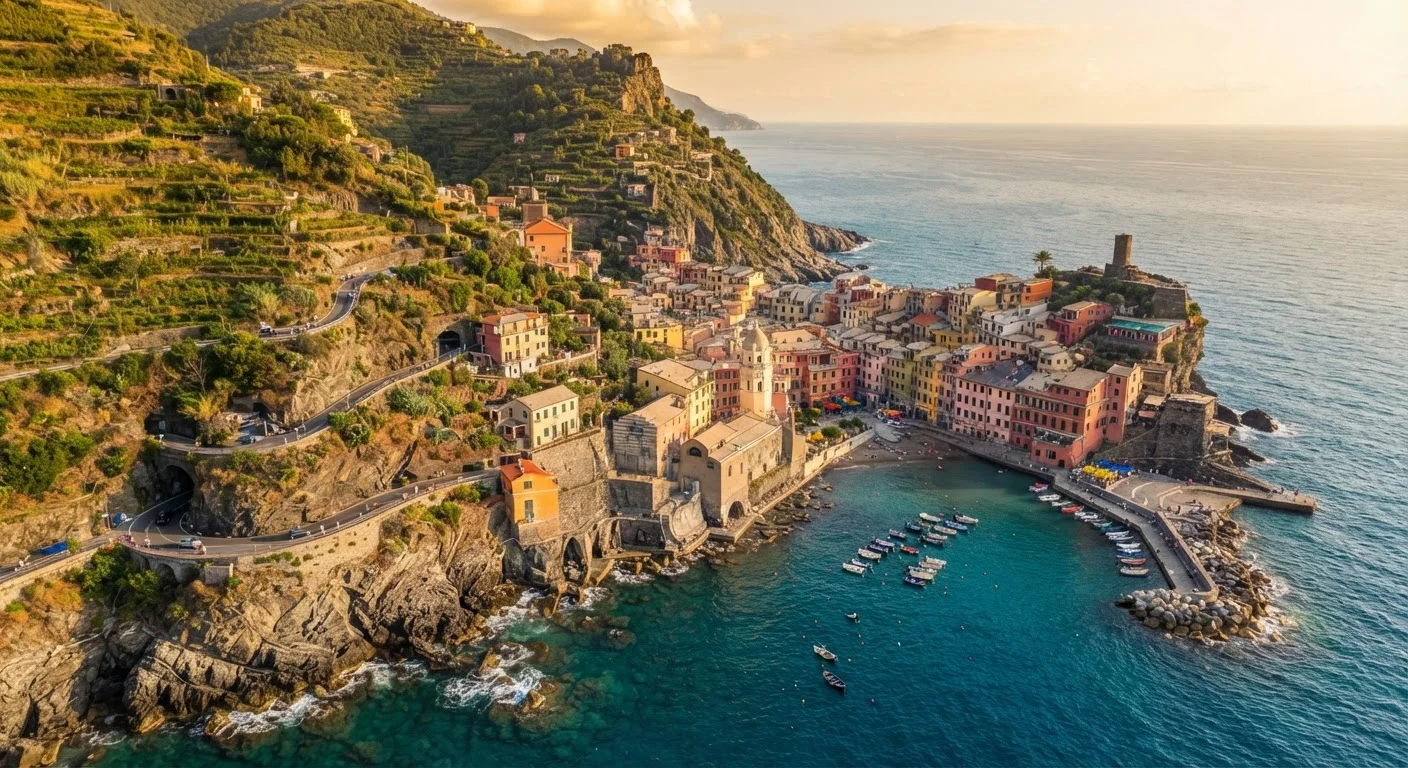
Why Going Car-Free Makes Sense on the Amalfi Coast
The Amalfi Coast's famous SS163 highway is extraordinarily narrow — in many stretches, two vehicles can barely pass simultaneously. Driving it requires constant concentration, and parking in villages like Positano or Ravello is scarce, expensive, and sometimes simply unavailable. For most visitors, surrendering the rental car is not a sacrifice; it's a liberation.
Going car-free also unlocks access to the coast's true character. Ferries slow things down in the best possible way, placing you at water level with unobstructed views of the cliffs. Village stairs and footpaths bring you into neighborhoods that road traffic entirely bypasses. And without the stress of navigation, you're free to simply look up.
What you will need
The public transport network, while not without quirks, is genuinely functional for travelers willing to check timetables in advance and build a little flexibility into their days.
Getting Around: Your Transport Options
Understanding how the three main modes — ferries, buses, and walking paths — complement each other is the key to a smooth car-free trip.
Ferry ticket (Alicost or Travelmar)
Used to board seasonal passenger ferries connecting Positano, Amalfi, Salerno, and other coastal stops.
SITA Sud bus ticket
Required to ride the regional bus network that winds along the SS163 coastal road between towns.
Offline maps app (e.g., Maps.me or downloaded Google Maps)
Helps navigate coastal hiking trails and village lanes where mobile data may be unreliable.
Small daypack with water
Essential for walking coastal paths in warm weather, especially on longer hikes between towns.
Base yourself in a well-connected town
Choose a home base that gives you easy access to multiple transport options. Amalfi town sits at the geographic center of the coast and serves as the main hub for both ferry landings and SITA bus routes. Positano and Salerno are also strong options — Salerno in particular offers a wider range of accommodations and a reliable train connection to Naples and beyond.
Use ferries for longer town-to-town legs
Seasonal passenger ferries operated by companies such as Alicost and Travelmar run routes connecting Positano, Amalfi, Ravello's marina at Atrani, Maiori, and Salerno. Ferries typically operate from around April through October, with peak frequency in July and August. Purchase tickets at harbor kiosks or booths near the dock — arrive at least 15–20 minutes early during peak season. The water journey between Positano and Amalfi takes roughly 35–40 minutes and offers unobstructed coastal views impossible to replicate from a car window.
Ride the SITA Sud bus along the SS163
The SITA Sud regional bus service runs year-round along the SS163 Amalfitana highway, threading every clifftop village between Sorrento and Salerno. Tickets can be bought at tobacco shops (tabacchi), some newsstands, and at major bus stops — validate your ticket as you board. Buses run frequently but fill quickly in summer; aim to travel before 9 a.m. or after 5 p.m. to avoid the worst crush. Single-journey tickets are typically inexpensive, and multi-ride booklets offer good value for longer stays.
Walk the coastal and mountain paths
Several maintained trails link Amalfi Coast towns on foot. The Sentiero degli Dei (Path of the Gods) runs approximately 7.8 kilometers from Agerola to Nocelle above Positano, delivering jaw-dropping ridge-top panoramas. The Valle delle Ferriere nature reserve trail from Amalfi is a cooler, forested alternative. Shorter village-to-village paths — such as the staircase connections between Amalfi and Atrani — make spontaneous walking between adjacent towns quick and rewarding. Trail conditions vary; check with local tourist offices or park authorities for current access information.
Combine transport modes strategically
The most flexible and enjoyable car-free strategy is mixing modes. A popular approach: take a morning ferry from your base to a distant town, explore on foot, then return by bus in the afternoon — or vice versa. This lets you move with the natural rhythm of the coast, avoid doubling back over the same road, and catch landscapes from both the sea and the clifftops. Keep a screenshot or printed copy of ferry and bus timetables in case connectivity drops.
Travel Light for Maximum Flexibility
On the Amalfi Coast, luggage becomes a real obstacle on steep staircases, crowded buses, and narrow ferry gangways. Pack a compact bag and leave large suitcases stored at your accommodation. You'll move faster, feel cooler, and enjoy the journey far more.
Peak Season Brings Real Crowds
July and August bring enormous visitor volumes to the Amalfi Coast. Buses can become dangerously overcrowded, ferries sell out, and popular trailheads reach capacity by mid-morning. If traveling in peak season, book ferry tickets in advance where possible and plan all transport for early morning or late afternoon.
Practical Tips and Common Pitfalls
A few habits will make your car-free Amalfi experience significantly smoother:
- Verify schedules before each day: Ferry and bus timetables change between shoulder and peak season. Always confirm with the official SITA Sud website or ferry operator boards at the harbor.
- Carry cash: While card payments are increasingly accepted, smaller ticket booths and tabacchi shops often prefer cash for transit purchases.
- Plan around midday crowds: Ferries and buses between 10 a.m. and 2 p.m. are busiest. Early starts or late-afternoon travel are consistently more comfortable.
- Allow buffer time: Coastal buses can run late due to traffic. Build 15–20 minutes of buffer into any connection that matters.
Verify Entry and Safety Info Before You Travel
Ferry schedules, bus routes, trail access, and local entry requirements can change. Always check with official government and operator sources — including the Italian coastguard for ferry conditions and local park authorities for trail closures — before your trip. Do not rely solely on third-party travel apps for safety-critical information.
With a little planning, the Amalfi Coast rewards car-free travelers richly — often far more than those stuck behind a steering wheel on its legendary bends.
The content on this site is for informational purposes only and is not a substitute for professional advice. Always consult a qualified professional for guidance specific to your situation.