

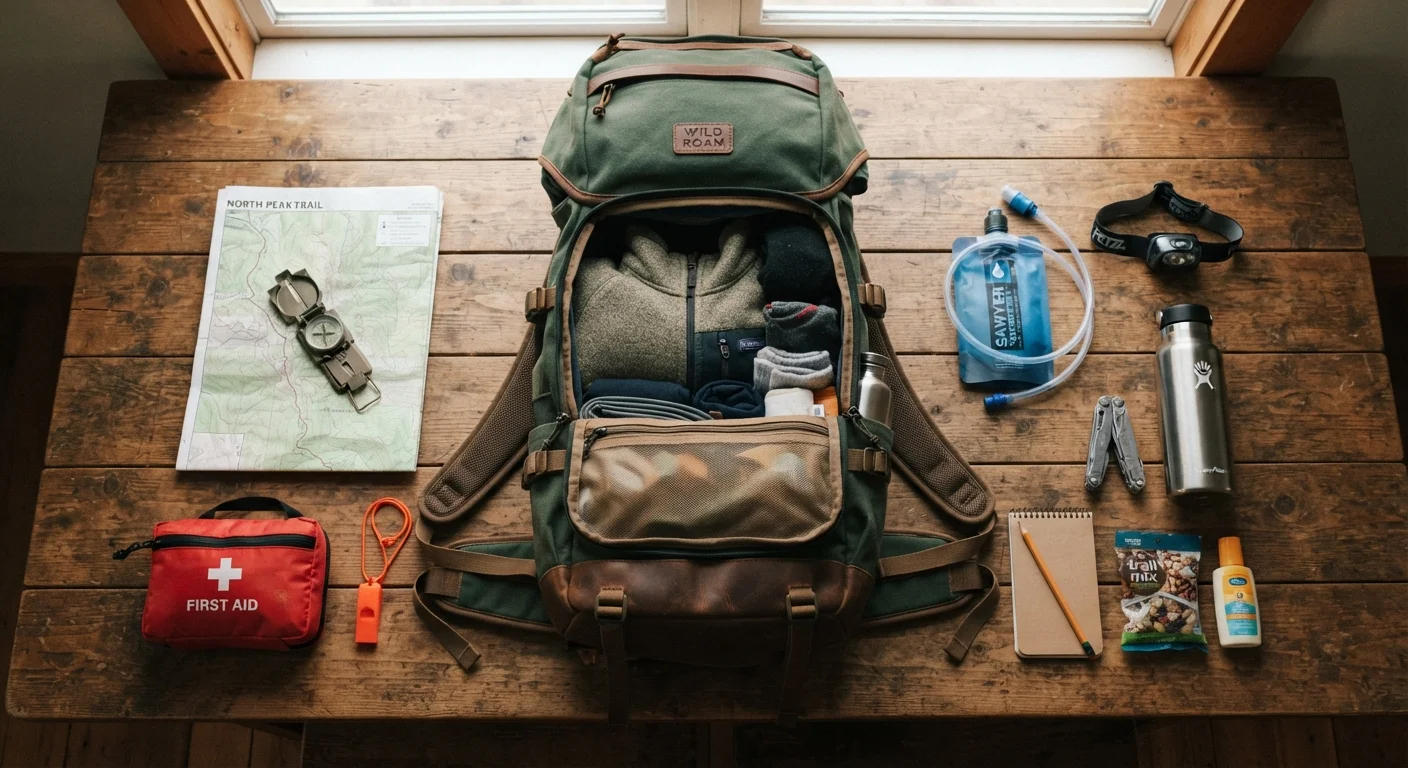
A Framework Built to Last
The 10 Essentials trace their roots to The Mountaineers, a Seattle-based outdoor organization that first published the list in the 1930s. The original intent was straightforward: give hikers, climbers, and backcountry travelers a reliable checklist for answering two questions — can you respond effectively to an emergency, and can you safely spend an unplanned night outdoors?
Decades later, the framework has evolved from a simple inventory into a systems-based approach. Rather than mandating specific items, modern interpretations define ten functional categories, letting each traveler choose gear suited to their trip. That flexibility is precisely why the framework remains relevant for everything from a weekend trail hike to a multi-day alpine expedition.
If you're building out a broader adventure travel plan, the 10 Essentials serve as the safety foundation everything else is built upon. Below, we break down each category — what it covers, why it matters, and how to think about it for your next outing.
Navigation
A topographic map and compass form the core of this category — and critically, the skills to use them. GPS devices and smartphone apps are valuable supplements, but batteries die and signals drop in remote terrain. Navigation readiness means knowing how to orient a map, take a bearing, and identify key terrain features. Download offline maps before departure, and always carry a physical backup for any route venturing beyond established trails.
Digital navigation tools are supplements, not substitutes — always carry a physical map and compass.
Sun Protection
Elevation amplifies UV exposure significantly — UV intensity increases roughly 4–5% for every 1,000 feet of altitude gain. This category covers sunscreen, UV-blocking sunglasses, and sun-protective clothing including a wide-brimmed hat. Snow and water both reflect UV radiation, compounding the exposure risk. Don't underestimate overcast days; clouds block visible light more effectively than UV rays.
UV intensity increases with elevation — sun protection is non-negotiable even on cloudy mountain days.
Insulation
Weather in the backcountry changes faster than forecasts predict. This category means carrying extra layers beyond what you expect to need — insulating mid-layers, a waterproof shell, gloves, and a hat. The goal is preventing hypothermia if you're caught stationary, wet, or delayed overnight. Cotton absorbs moisture and loses insulating value when wet; wool and synthetic materials perform significantly better in variable conditions.
Pack insulation for the weather you might face, not just the weather you expect.
Illumination
A headlamp with fresh or spare batteries is the standard here — hands-free lighting is essential for navigation, camp tasks, and signaling. Modern LED headlamps offer impressive battery life, but cold temperatures drain batteries faster. Store spare batteries in a warm inner pocket during winter outings. Even on day hikes, an unexpected delay can put you on the trail after dark; illumination is not optional gear.
Headlamps beat handheld flashlights in every backcountry scenario — always carry one, even on day hikes.
First-Aid Supplies
This category covers a purpose-built first-aid kit plus the knowledge to use it. At minimum: wound care supplies, blister treatment, pain relief, and any personal prescription medications. Trip-specific additions might include a SAM splint, irrigation syringe, or altitude-related medications if applicable. Wilderness first aid courses — ranging from one-day to multi-day certifications — give these supplies meaningful context and significantly improve emergency response capability.
A first-aid kit is only as useful as the skills of the person carrying it.
Fire
Fire-starting capability serves two critical functions: warmth and signaling. This category calls for multiple redundant ignition methods — waterproof matches, a lighter, and a ferro rod are a common combination. Tinder that works when wet, such as petroleum jelly-coated cotton balls or commercial fire starters, dramatically increases success rates in damp conditions. Always verify local fire regulations and any active fire restrictions before your trip, as open fires are prohibited in many wilderness areas.
Redundant fire-starting tools — not just one lighter — are what separate functional readiness from wishful thinking.
Repair Tools and Knife
A reliable multi-tool or fixed-blade knife anchors this category, supported by duct tape, cord, and gear-specific repair items (tent pole sleeve, sleeping pad patch kit). Field repairs can make the difference between completing a trip safely and an early evacuation. Think through what your specific gear load might require — a trekking pole ferule, pack strap webbing, or footwear sole adhesive — and pack accordingly.
Tailoring your repair kit to your specific gear is smarter than carrying a generic assortment.
Nutrition
The guidance here is to carry at least one day's worth of extra food beyond the planned trip duration. Choose calorie-dense, shelf-stable foods that require minimal or no cooking — nuts, energy bars, jerky, and dried fruit are reliable standbys. Emergency nutrition needs to sustain physical and cognitive function under stress, so prioritize fat and protein content over convenience. Avoid packing foods that freeze solid in cold conditions if you can't cook them.
Extra food isn't dead weight — it's the fuel that keeps decision-making sharp when things go sideways.
Hydration
This category covers both adequate water capacity and a reliable purification method. How much water you need varies enormously by temperature, exertion, and altitude, but having the means to collect and treat water from natural sources dramatically extends your self-sufficiency. Water filters, chemical tablets, and UV purifiers each have trade-offs in weight, speed, and effectiveness against different pathogens. Carry at least two purification methods on multi-day trips.
Water purification capability, not just a full bottle, is the real measure of hydration preparedness.
Emergency Shelter
The final category addresses the very real possibility of an unplanned overnight. Options range from a lightweight emergency bivy or space blanket to a dedicated ultralight tarp. Even on summer day hikes, carrying something that retains body heat and blocks wind can prevent a survivable situation from becoming a fatal one. Bivy sacks that reflect body heat are particularly effective in weight-to-warmth ratio, making them a sensible addition to any pack regardless of trip length.
An emergency bivy weighs mere ounces but can be the single most important item in your pack.
Putting It All Together Before You Head Out
Knowing the framework is only half the work. The other half is honest self-assessment before every trip. Terrain type, trip duration, group size, weather forecast, and distance from trailheads all affect how thoroughly each category needs to be covered. A desert day hike demands a different hydration strategy than a multi-day mountain route in early spring.
Practice Before You Need It
Run through your 10 Essentials kit at home before each trip — check battery levels, expiration dates on first-aid supplies, and water filter function. Familiarity with your gear under calm conditions dramatically improves your ability to use it correctly under stress. Consider a local day hike as a 'shakedown' run for new or unfamiliar items before relying on them in remote terrain.
It's also worth remembering that gear competence matters as much as gear possession. A navigation app is useless if you haven't practiced offline map reading; a fire starter fails if you've never used one in wet conditions. Pair each category with the skills that make it functional. For more on what popular shortcuts can cost you, see our piece on debunking common outdoor survival myths.
Finally, the 10 Essentials aren't just about personal survival — they connect directly to how you move through wild places responsibly. Preparedness reduces the burden on search-and-rescue teams and helps you stay aligned with the values explored in our guide to Leave No Trace principles. Pack smart, build your skills, and head out with confidence.
The content on this site is for informational purposes only and is not a substitute for professional advice. Always consult a qualified professional for guidance specific to your situation.