

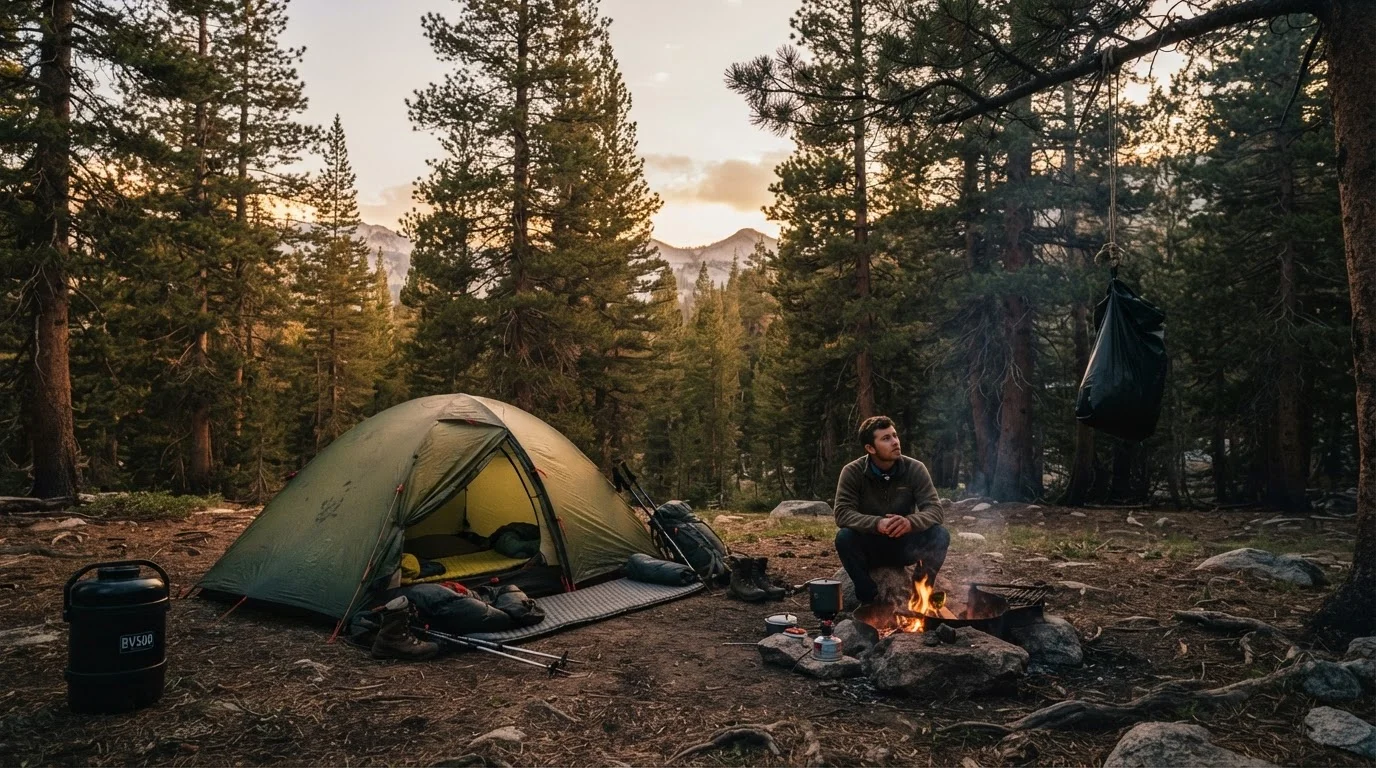
Why Habits Matter More Than Luck
Bears are intelligent, adaptable animals that quickly learn to associate human campsites with easy calories. Once a bear connects people with food, it tends to return — often with bolder behavior each visit. Wildlife managers and researchers consistently point to one root cause of most bear-human conflicts: preventable human behavior at camp. The good news is that the same body of research shows clear, actionable habits that dramatically reduce the likelihood of an encounter going wrong.
If you're new to backcountry travel, our overnight hike planning guide covers foundational safety and campsite etiquette alongside this wildlife guidance. And if you want the broader ethical context, the Leave No Trace principles frame much of what responsible bear-country camping is built on.
Core Practices for a Bear-Safe Camp
The following practices are grounded in guidance from wildlife agencies, land managers, and field research. Treat each one as non-negotiable rather than optional.
Store all food, trash, and scented items in an approved bear-resistant canister or designated bear box.
Bears have a sense of smell estimated to be many times more powerful than a dog's. Soft-sided coolers, stuff sacks, and standard backpacks provide no meaningful barrier. Certified hard-sided canisters and fixed bear boxes deny access completely, removing the reward that teaches bears to seek out camps.
Cook and eat at least 200 feet downwind from your tent.
Cooking odors cling to surfaces, clothing, and soil. Establishing a dedicated cooking zone away from your sleep area keeps your tent from becoming an odor magnet overnight.
Never bring food, wrappers, or scented items into your tent.
Even an empty wrapper retains scent. A bear that pushes into a tent for a food reward becomes significantly more dangerous to future campers.
Make deliberate noise while hiking through dense cover or near running water.
Surprise encounters at close range trigger defensive behavior in bears. Consistent noise gives bears the opportunity to move away before an encounter occurs.
Carry bear spray on your hip and practice the draw before you need it.
Bear spray has a strong track record in peer-reviewed wildlife research as an effective deterrent in close encounters. Its effectiveness depends entirely on being accessible and deployed correctly under stress.
Pack out all trash and food scraps — leave no crumbs or grease at camp.
Even small food traces condition bears to search campsites. Dishwater with food particles should be strained and the solids packed out; gray water should be dispersed well away from camp.
Even experienced backpackers sometimes overlook less obvious attractants. Lip balm, sunscreen, insect repellent, and even toothpaste carry scents that can draw bears. Every scented item — not just food — belongs in your secured storage.
Don't Forget Non-Food Attractants
Toothpaste, sunscreen, insect repellent, lip balm, and even scented trash bags are all attractants to bears. Treat every scented item in your kit the same way you treat food — store it in your canister or bear box every time you leave camp or go to sleep. A consistent routine is far more reliable than selective vigilance.
On the Trail: Reducing Surprise Encounters
Most defensive bear encounters happen when a bear is startled at close range. Noise is your best tool. Talk, clap, or call out — especially near streams, in dense vegetation, or when hiking into the wind where bears can't easily smell or hear your approach.
91%
Bear spray effectiveness in close encounters
A peer-reviewed study published in the Journal of Wildlife Management found bear spray stopped undesirable bear behavior in approximately 92% of close encounters documented in the study.
200 ft
Minimum distance: sleep area to food storage
The U.S. National Park Service and most wilderness land managers recommend a minimum of 200 feet (roughly 70 adult paces) between sleeping areas and food storage or cooking zones.
Solo hikers face an elevated risk profile in bear country, simply because a group of people produces more noise and appears larger to wildlife. Our article on solo hiking risks and rewards explores these dynamics in depth. Regardless of group size, always let someone know your route and expected return — this matters for any wildlife emergency, not just bears.
If you do see a bear, stay calm. Do not run. Speak in a low, firm voice, make yourself appear large, and back away slowly while facing the animal. Bear spray — carried accessibly on your hip, not buried in your pack — is considered one of the most effective deterrents available when a bear approaches aggressively. Check current regulations and land-manager guidance for the specific area you're visiting before you go.
Start Your Next Trip Right
Building these habits before your trip makes them instinctive in the field. Research the specific regulations for your destination — national parks, wilderness areas, and state lands each have their own food-storage requirements, and some mandate specific equipment. Check with the relevant land management agency for current rules.
Wildlife-aware camping is ultimately an act of stewardship. When you reduce conflict, you protect the bear's life as much as your own — habituated bears frequently have to be relocated or euthanized. That broader ethic connects directly to Leave No Trace values and to the spirit of backcountry travel itself: leaving wild places as wild as you found them.
Black Bears vs. Grizzlies: Response Differs
The recommended response to a bear encounter varies by species. For a defensive grizzly attack, many wildlife agencies advise deploying bear spray or, if contact occurs, playing dead. For a predatory black bear attack, fighting back is generally recommended. Always research the species present in your destination area and consult current guidance from the relevant land management agency before your trip. This article provides general educational information and is not a substitute for official wilderness safety training.
The content on this site is for informational purposes only and is not a substitute for professional advice. Always consult a qualified professional for guidance specific to your situation.