

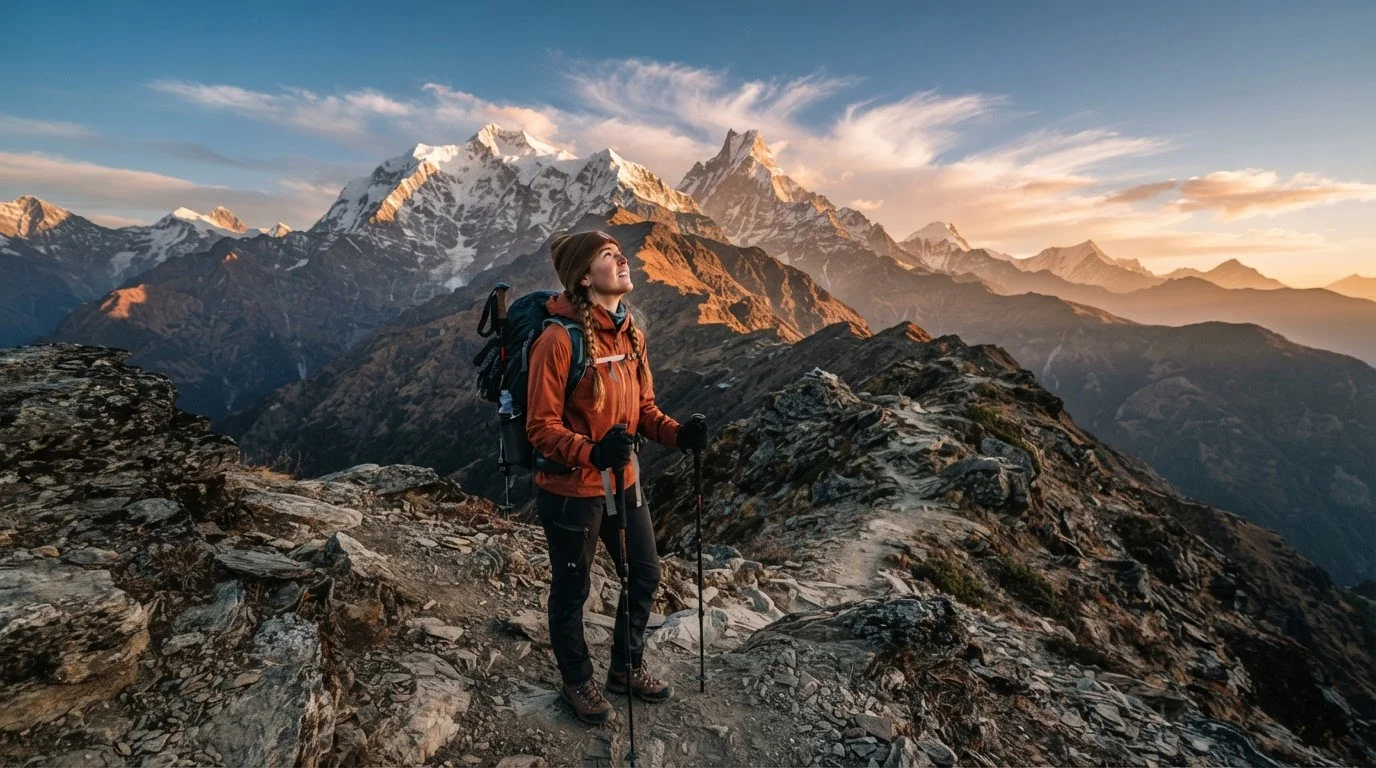
What Happens Inside Your Body at Altitude
At sea level, the air you breathe contains roughly 21% oxygen — the same percentage as at the summit of a 4,000-metre peak. What changes with elevation is air pressure. As you climb, atmospheric pressure drops, meaning each breath pulls in fewer oxygen molecules. Your blood oxygen saturation begins to fall, and your body scrambles to compensate.
Your respiratory system responds first: breathing rate increases to draw in more air. Your heart beats faster to circulate oxygen-carrying red blood cells more efficiently. Over days and weeks, your body ramps up red blood cell production — a process called erythropoiesis — to carry more oxygen per unit of blood. This longer-term adaptation is what mountaineers and altitude athletes deliberately trigger through high-altitude training camps.
The trouble is that these adaptations take time. When you ascend faster than your body can adjust, the oxygen shortfall triggers the symptoms we recognise as altitude sickness. As one useful framing: the mountain doesn't care how prepared you feel — it only responds to how quickly you arrived.
“The physiology of altitude is democratic — it doesn't discriminate based on fitness, experience, or how badly you want to reach the summit. The body follows its own timetable for adaptation.”
— Peter Hackett, Altitude medicine researcher and director of the Institute for Altitude Medicine
Recognising the Symptoms: Mild to Severe
AMS symptoms exist on a spectrum. Mild cases feel a lot like a hangover — headache, fatigue, loss of appetite, dizziness, and disturbed sleep. These are often dismissed by eager travellers in the excitement of reaching a new destination. That dismissal can be dangerous.
As conditions progress toward high-altitude cerebral edema (HACE), symptoms escalate to include confusion, loss of coordination (ataxia), and eventually unconsciousness. HACE represents dangerous swelling of brain tissue and is a medical emergency.
Equally life-threatening is high-altitude pulmonary edema (HAPE), where fluid accumulates in the lungs. Signs include a persistent cough (sometimes producing pink, frothy fluid), extreme breathlessness even at rest, and a crackling sound when breathing. HAPE is one of the leading causes of altitude-related death.
Use the Lake Louise Score as a Quick Check
The Lake Louise Scoring System is a simple, widely used self-assessment tool for AMS. It asks you to rate headache, gastrointestinal symptoms, fatigue, and dizziness on a short scale. A combined score of 3 or above (with headache present) is generally considered indicative of AMS. Familiarise yourself with this tool before your trip — it can help you make clearer decisions when you're already feeling the effects of altitude.
Hikers frequently underestimate how elevation gain affects their bodies, making early symptom recognition even more critical. Knowing what to watch for — before you feel it — can make a decisive difference.
Acclimatisation: Your Body's Best Ally
The single most effective strategy against altitude sickness is controlled, gradual ascent. Most wilderness medicine guidelines suggest gaining no more than 300–500 metres of sleeping elevation per day above 3,000 metres, with a rest day built in every third day. The principle is sometimes summarised as: climb high, sleep low — spend time at altitude during the day, but descend to a lower camp to sleep.
~25%
Travellers developing AMS above 2,500 m
Wilderness medicine research consistently estimates that roughly one in four people ascending rapidly above 2,500 metres will experience some degree of acute mountain sickness.
300–500 m
Recommended max daily sleeping elevation gain
Standard wilderness medicine guidelines recommend limiting sleeping altitude gains to 300–500 metres per day above 3,000 metres to allow adequate acclimatisation.
6–12 hrs
Typical onset window for AMS symptoms
Most cases of acute mountain sickness produce noticeable symptoms within 6 to 12 hours of arriving at a new high elevation, according to published altitude medicine literature.
Hydration matters, too — mild dehydration worsens headaches and fatigue, compounding the body's workload. Limiting alcohol and sedatives in the first 24–48 hours at a new elevation is equally advisable, as both suppress the respiratory drive your body relies on to compensate for thin air.
Some travellers discuss pre-acclimatisation strategies such as spending nights at moderate altitude (e.g., 2,000–2,500 m) before departing for higher destinations. While evidence for various pre-acclimatisation approaches varies, the core principle of avoiding rapid gain in sleeping altitude remains well supported.
Altitude Sickness Is Not Predictable from Past Trips
Having acclimatised well on a previous high-altitude trip does not guarantee the same result next time. Individual susceptibility can vary between trips depending on your rate of ascent, recent sleep quality, hydration, and overall health at the time. Treat each high-altitude journey as a fresh acclimatisation challenge rather than assuming your body will respond the same way it did before.
When to Descend — and Who to Consult
The golden rule of high-altitude travel: never ascend with symptoms of AMS. If your headache persists or worsens after rest and fluids, hold your position. If any signs of HACE or HAPE appear, descend immediately — even a drop of 300–1,000 metres can produce rapid, dramatic improvement.
Medication options such as acetazolamide and supplemental oxygen are tools used in wilderness medicine for AMS management, but they should only be used under the guidance of a qualified healthcare professional. Consult a travel medicine clinic or your doctor well before departure to discuss what is appropriate for your specific health situation, itinerary, and any pre-existing conditions.
High-altitude destinations — from the Peruvian Andes to the Himalayas to the Ethiopian Highlands — reward the well-prepared adventurer. Understanding what your body faces above 2,500 metres isn't a reason to stay home; it's the foundation for going farther, safer, and with greater confidence.
This article is for general informational and educational purposes only and does not constitute medical advice. Always consult a qualified healthcare professional before travelling to high-altitude destinations, particularly if you have any pre-existing health conditions.
Frequently Asked Questions
Yes — physical fitness does not protect against altitude sickness. The condition is driven by how quickly you ascend, not how strong your cardiovascular system is. Even elite athletes can develop AMS if they gain elevation too rapidly.
Symptoms most commonly appear within 6 to 12 hours of reaching a new high elevation, though they can develop as quickly as 1–2 hours in some individuals. They often feel worse at night when breathing patterns shift during sleep.
AMS (acute mountain sickness) is the common, milder form. HACE (high-altitude cerebral edema) involves dangerous swelling of the brain, while HAPE (high-altitude pulmonary edema) involves fluid buildup in the lungs. Both HACE and HAPE are serious medical emergencies requiring immediate descent and professional care.
Staying well hydrated supports your body's adjustment to altitude, but water alone will not prevent or cure altitude sickness. Adequate hydration simply removes one additional stressor while your body acclimatises.
Some travellers use medications such as acetazolamide (Diamox) for prevention or treatment of AMS. Any decision about medication should be made in consultation with a qualified healthcare professional before your trip.
If symptoms persist or worsen — particularly confusion, loss of coordination, or difficulty breathing — descend immediately and seek emergency medical attention. Do not wait to see if symptoms resolve on their own in severe cases.
The content on this site is for informational purposes only and is not a substitute for professional advice. Always consult a qualified professional for guidance specific to your situation.