

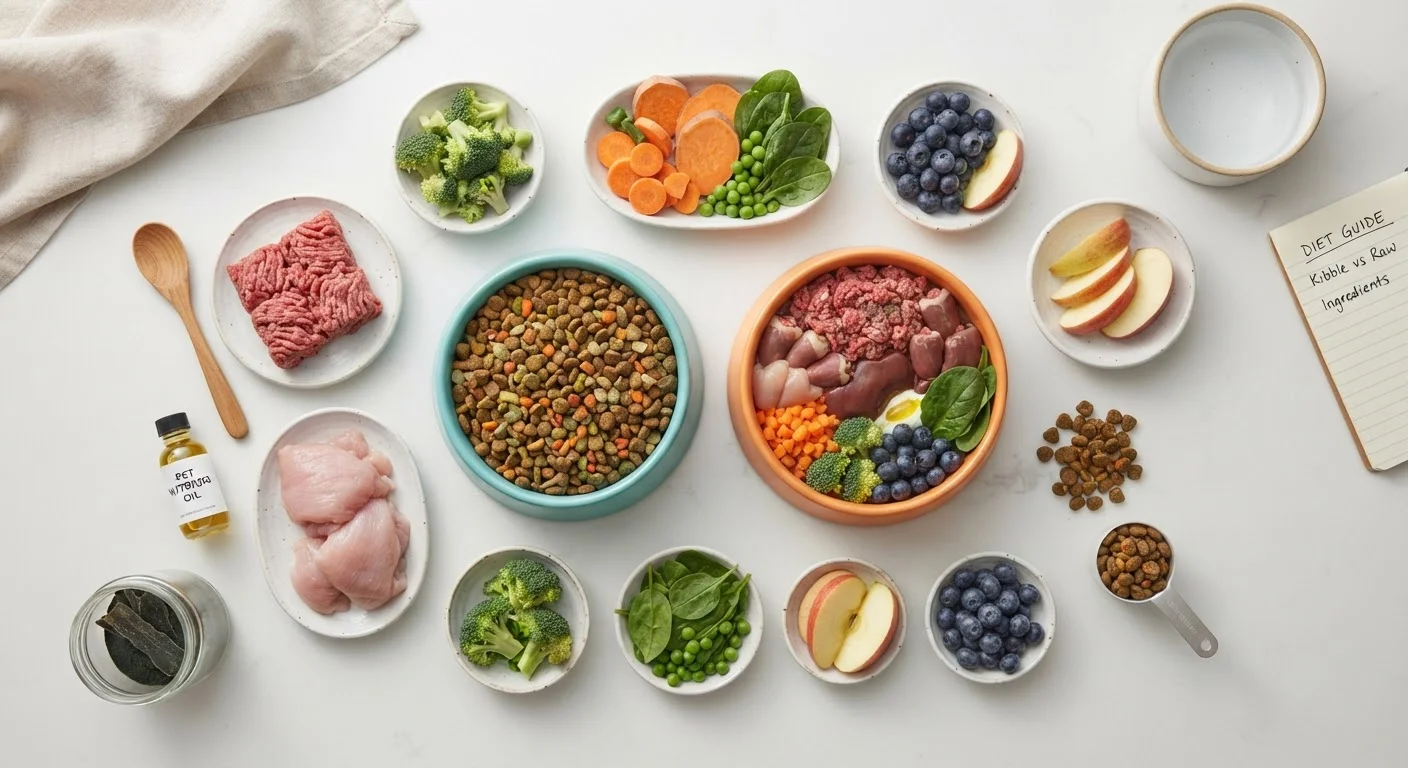
Why Pet Nutrition Myths Spread So Easily
Pet owners want the best for their animals, and that genuine care makes them receptive to persuasive-sounding feeding advice — especially when it comes packaged with emotional appeals about "natural" diets or fears about commercial pet food. The problem is that popular belief and peer-reviewed veterinary nutrition science often diverge significantly.
Understanding where myths come from is the first step to spotting them. Many originate from extrapolating human dietary trends onto animals, misreading a single study, or marketing language that sounds like health guidance. The myth-fact pairs below reflect some of the most commonly repeated misconceptions, evaluated against current veterinary consensus. For a broader look at how early feeding choices can shape a pet's long-term wellbeing, see our guide to mistakes new pet owners make.
Myth
Grain-free diets are healthier for all dogs because grains are unnatural fillers.
Fact
Grains are a legitimate source of nutrients and energy for dogs, and grain-free diets have been associated with a potential increase in dilated cardiomyopathy (DCM) in certain breeds.
The idea that grains are harmful to dogs gained traction partly by borrowing from human gluten-sensitivity concerns. In reality, true grain allergies in dogs are uncommon; most food allergies in dogs involve animal proteins, not grains. More significantly, the U.S. Food and Drug Administration (FDA) investigated a possible link between grain-free, legume-heavy diets and DCM — a serious heart condition — beginning in 2018. While the causal mechanism is not yet fully understood, the investigation highlighted that "grain-free" does not automatically mean nutritionally superior. Always discuss dietary changes with your veterinarian before switching.
Myth
Raw food diets are the most natural and safest option for pets.
Fact
Raw diets carry documented risks of bacterial contamination — including Salmonella and Listeria — that can sicken pets and the people who handle the food.
Both the American Veterinary Medical Association (AVMA) and the Centers for Disease Control and Prevention (CDC) have issued guidance cautioning against raw meat-based diets for pets, citing pathogen risks. Studies have detected harmful bacteria in commercially prepared raw pet food products. Immunocompromised individuals, young children, and the elderly in the household face particular risk from environmental contamination. Additionally, many raw diets — especially home-prepared versions — fail to meet established nutritional standards without careful formulation by a veterinary nutritionist.
Myth
Homemade pet food is always a healthier choice than commercial kibble.
Fact
Most homemade pet diets, without expert formulation, are nutritionally incomplete and can cause serious deficiencies over time.
A widely cited study published in the Journal of Nutritional Science evaluated hundreds of home-prepared dog diet recipes and found the vast majority were deficient in multiple essential nutrients, including calcium, zinc, and vitamins D and E. Unlike commercially produced foods evaluated against AAFCO standards, homemade meals require precise ingredient balancing. If you're committed to a home-prepared diet, work with a board-certified veterinary nutritionist to create a complete and balanced recipe specific to your pet's needs.
Myth
Cats can eat the same food as dogs without any concern.
Fact
Cats are obligate carnivores with distinct nutritional requirements — including taurine and arachidonic acid — that dog food does not provide in adequate amounts.
Unlike dogs, cats cannot synthesize taurine or arachidonic acid in sufficient quantities on their own and must obtain them directly from animal tissue. A taurine deficiency in cats can lead to dilated cardiomyopathy and central retinal degeneration, causing blindness. Dog foods are not formulated with feline requirements in mind and should never serve as a cat's primary diet. This distinction matters regardless of whether the food is wet, dry, or raw. See our article on indoor vs. outdoor cat health for more on meeting feline-specific needs.
Myth
Table scraps are a harmless treat and a good way to add variety.
Fact
Many common human foods are toxic to pets, and regular table scraps can significantly unbalance a pet's diet.
Foods such as grapes, raisins, onions, garlic, xylitol (found in sugar-free products), chocolate, and macadamia nuts are well-documented hazards for dogs and cats. Even foods that aren't acutely toxic — like cooked chicken skin or buttered vegetables — contribute excess fat and calories that can lead to obesity and pancreatitis over time. Feeding scraps also reinforces attention-seeking behaviors at mealtimes. If you want to offer variety, ask your vet which whole foods are safe and in what quantities for your specific pet's size and health status.
What Balanced Pet Nutrition Actually Looks Like
Despite the noise, the core principles of pet nutrition are relatively well-established. For the majority of healthy dogs and cats, a commercially prepared food that meets the AAFCO nutritional adequacy statement for their life stage — puppy, adult, or senior — provides a reliable nutritional baseline. That statement, found on the product label, means the food has either been formulated to meet or tested against established nutrient profiles.
~80%
Homemade pet diets found nutritionally incomplete
A review of home-prepared dog diet recipes found approximately 80% were deficient in at least one essential nutrient, according to research published in the Journal of Nutritional Science.
1 in 3
Pets in the US affected by obesity
The Association for Pet Obesity Prevention estimates that roughly one-third of dogs and cats in the United States are overweight or obese, a condition often linked to overfeeding and inappropriate treats.
Life stage matters more than most owners realize. Puppies and kittens have higher protein, fat, and mineral demands than adult animals, and senior pets may benefit from adjusted phosphorus or calorie levels depending on their health status. Breed size also plays a role: large-breed puppies, for instance, require controlled calcium and phosphorus ratios to support healthy skeletal development.
Consistency in feeding schedules supports digestive health and can help owners detect appetite changes — an early signal of illness — more readily. Our article on daily feeding routines that support long-term pet health explores how meal timing and portion control contribute to overall wellbeing.
Dietary Supplements Are Not Risk-Free
Many pet owners add supplements — such as fish oil, probiotics, or vitamins — to their pet's diet believing they are always beneficial. However, over-supplementation can cause toxicity or interfere with nutrient balance, particularly with fat-soluble vitamins like A and D. Never add supplements to your pet's diet without consulting a veterinarian first, especially if your pet is already eating a commercially complete food.
When in doubt about your specific pet's dietary needs — particularly if they have a health condition, are pregnant, or are at an unusual life stage — a consultation with a veterinary nutritionist is the most reliable path forward. General nutrition information, including everything in this article, is educational guidance and is not a substitute for professional veterinary advice tailored to your individual animal.
The content on this site is for informational purposes only and is not a substitute for professional advice. Always consult a qualified professional for guidance specific to your situation.