

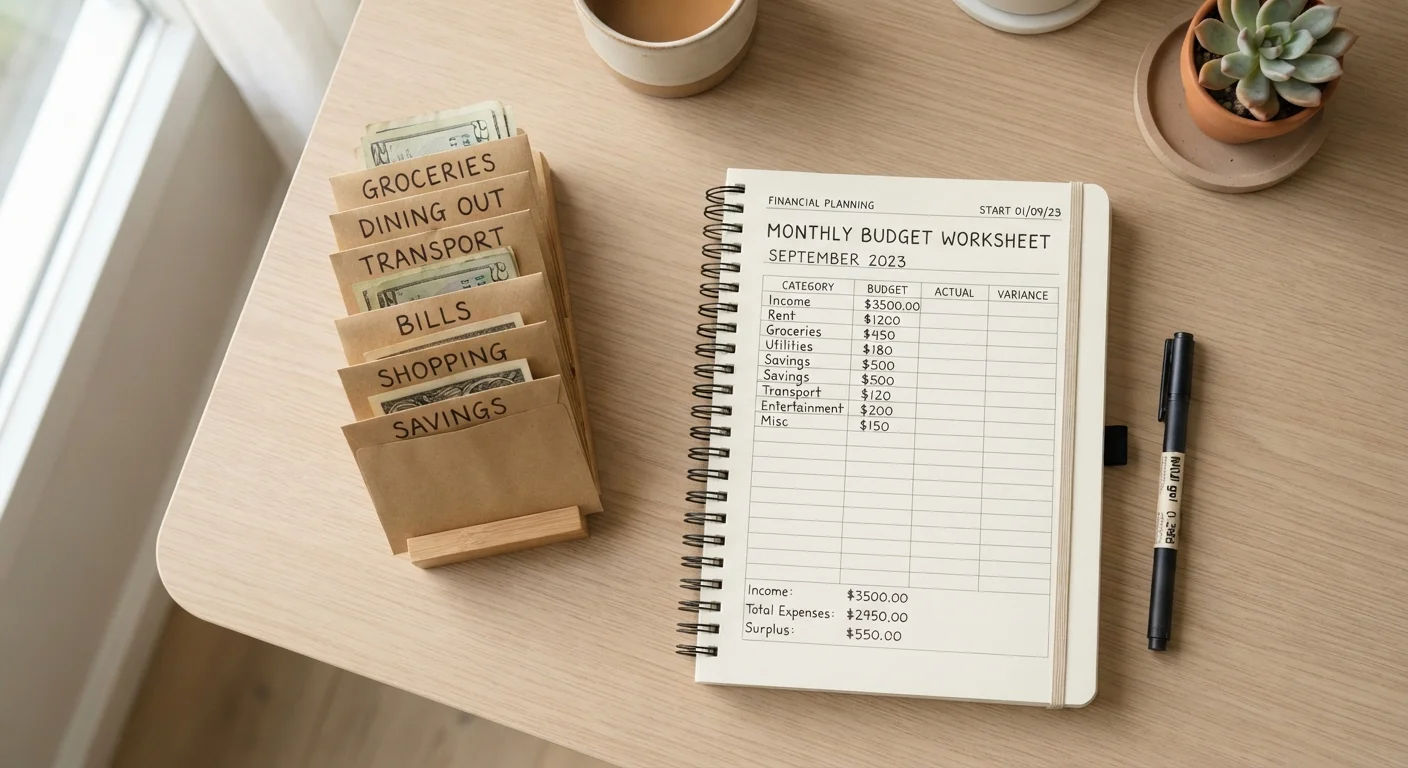
How Zero-Based Budgeting Works
The mechanics are straightforward: at the start of each month, list your total expected take-home income. Then assign dollar amounts to every category of spending and saving until the sum of all allocations equals your income. If you earn $4,200 this month, you build a budget where $4,200 is fully spoken for — rent, groceries, utilities, savings, loan payments, and even discretionary spending all receive specific amounts.
The critical distinction is that savings and debt repayment are first-class allocations, not afterthoughts. You do not save whatever is left at the end of the month; you assign a savings amount at the start, just as you do with your electric bill. This structural shift is what separates zero-based budgeting from loosely tracking expenses after the fact.
Each new month starts fresh. Rather than copying last month's numbers wholesale, you review each category and decide whether the amount still makes sense. A month with a planned car service gets a larger auto-maintenance allocation; a month you're staying home more gets a reduced dining-out line. This prevents budgets from drifting upward by habit.
Create a Miscellaneous Buffer Category
Even careful planners encounter expenses that don't fit neatly into existing categories. Build a small 'miscellaneous' or 'buffer' line — typically $50–$100 — into every month's zero-based budget. This gives you a legitimate place to put surprise costs without blowing up other categories, while keeping total allocations honest.
This article is for general informational purposes only and does not constitute personalised financial advice. Consult a qualified financial professional for guidance specific to your situation.
Setting Up Your Zero-Based Budget: A Practical Framework
Follow these steps to build your first zero-based budget. If you're brand new to budgeting altogether, the step-by-step guide to building your first monthly budget covers the foundational groundwork in detail.
- Calculate net monthly income. Use take-home pay — after taxes and deductions. For variable income, use a conservative estimate based on recent history.
- List fixed expenses first. Rent, mortgage, insurance premiums, loan minimums, and subscriptions. These don't change much month to month.
- Estimate variable necessities. Groceries, utilities, fuel, and similar categories fluctuate. Use 3-month averages as a starting point.
- Allocate savings and debt goals. Assign specific dollar amounts to your emergency fund, retirement contributions, and any extra debt payments.
- Budget discretionary spending. Dining out, entertainment, clothing, and personal care each get their own line with a realistic cap.
- Verify the math. Income minus all allocations should equal zero. If you have money left over, assign it — to savings, a sinking fund, or an upcoming expense.
~33%
Americans who follow a formal budget
Surveys consistently find only about one-third of U.S. adults maintain a detailed monthly budget, according to Gallup polling data.
$1,000+
Average monthly untracked discretionary spend
U.S. Bureau of Labor Statistics Consumer Expenditure data suggests many households have significant discretionary spending that goes unmonitored month to month.
3–6 months
Recommended emergency fund length
Financial planners generally recommend building three to six months of essential expenses in an accessible savings account as a baseline cushion.
Who Benefits Most — and Where It Gets Challenging
Zero-based budgeting tends to work well for people who feel their money disappears without a clear reason, those actively paying down debt, or anyone building a specific financial goal like a home down payment. The act of naming every dollar surfaces spending habits that more passive methods miss.
It pairs naturally with the broader principle of understanding the full landscape of income and expenses — once you have a clear picture of where money comes from and where it goes, zero-based budgeting gives that picture a decision layer.
The method is more demanding than alternatives. It requires monthly effort and honest category tracking. People with highly irregular income may find it difficult to build a reliable starting figure. If that friction sounds familiar, the pay-yourself-first approach offers a simpler structure worth comparing.
Zero-Based Budgeting vs. Other Methods
Zero-based budgeting is one of several structured approaches to managing money. It offers high granularity and control, but it isn't inherently superior to every other method for every person. The right budgeting system is the one you'll actually use consistently. If ZBB feels overwhelming at first, starting with a simpler framework and graduating to ZBB is a perfectly valid path. You can also explore common budgeting myths that may be holding you back before deciding on a method.
Keeping Your Budget Working Month to Month
A zero-based budget is only as useful as the follow-through. Mid-month check-ins — even brief ones — allow you to catch category overspending early and reallocate before the damage compounds. Many people find that checking actual versus budgeted spending once a week takes less than ten minutes and prevents end-of-month surprises.
At month's end, review what worked and what didn't. Categories that consistently run over deserve a higher allocation; categories you never use might be folded into savings. Use the monthly budget health check as a structured framework for this review process.
Over time, zero-based budgeting builds a detailed map of your spending patterns. That information becomes valuable not just for month-to-month control, but for larger financial planning decisions — renegotiating bills, identifying room for increased savings, or understanding where a raise would have the most impact.
Frequently Asked Questions
No. It means every dollar is assigned a purpose — including savings, emergency funds, and debt repayment. Money directed to savings is still 'spent' in the budgeting sense; it just stays in your account or investment vehicle. The goal is intentional allocation, not zero savings.
It can work with irregular income, but it requires more planning. A common approach is to budget based on your lowest expected monthly income and create a buffer category for months when earnings are higher. Freelancers and gig workers often find it helpful to build a one-month income buffer first.
The initial setup may take one to two hours as you list all income sources and spending categories. Once a template is in place, most people spend 15–30 minutes updating allocations at the start of each month and a few minutes weekly tracking actuals.
You move money from a lower-priority category to cover the overage — this is called 'rolling with the punches' in budgeting language. The key is to adjust the written budget rather than ignore the overspend, so your total allocations still equal zero.
The 50/30/20 rule assigns broad percentage targets to needs, wants, and savings. Zero-based budgeting is more granular: every individual category — groceries, streaming, car insurance — gets its own dollar amount. ZBB requires more effort but gives sharper visibility into where money actually goes.
The content on this site is for informational purposes only and is not a substitute for professional advice. Always consult a qualified professional for guidance specific to your situation.