

Why 'Winging It' Rarely Works
Most people approach weeknight eating the same way: standing in front of the fridge at 6 p.m. with no clear plan. Research consistently links this kind of unstructured eating to higher reliance on processed convenience foods and lower overall diet quality — not because of poor intentions, but because of decision fatigue. By evening, the mental bandwidth needed to evaluate options and cook something varied has often been spent.
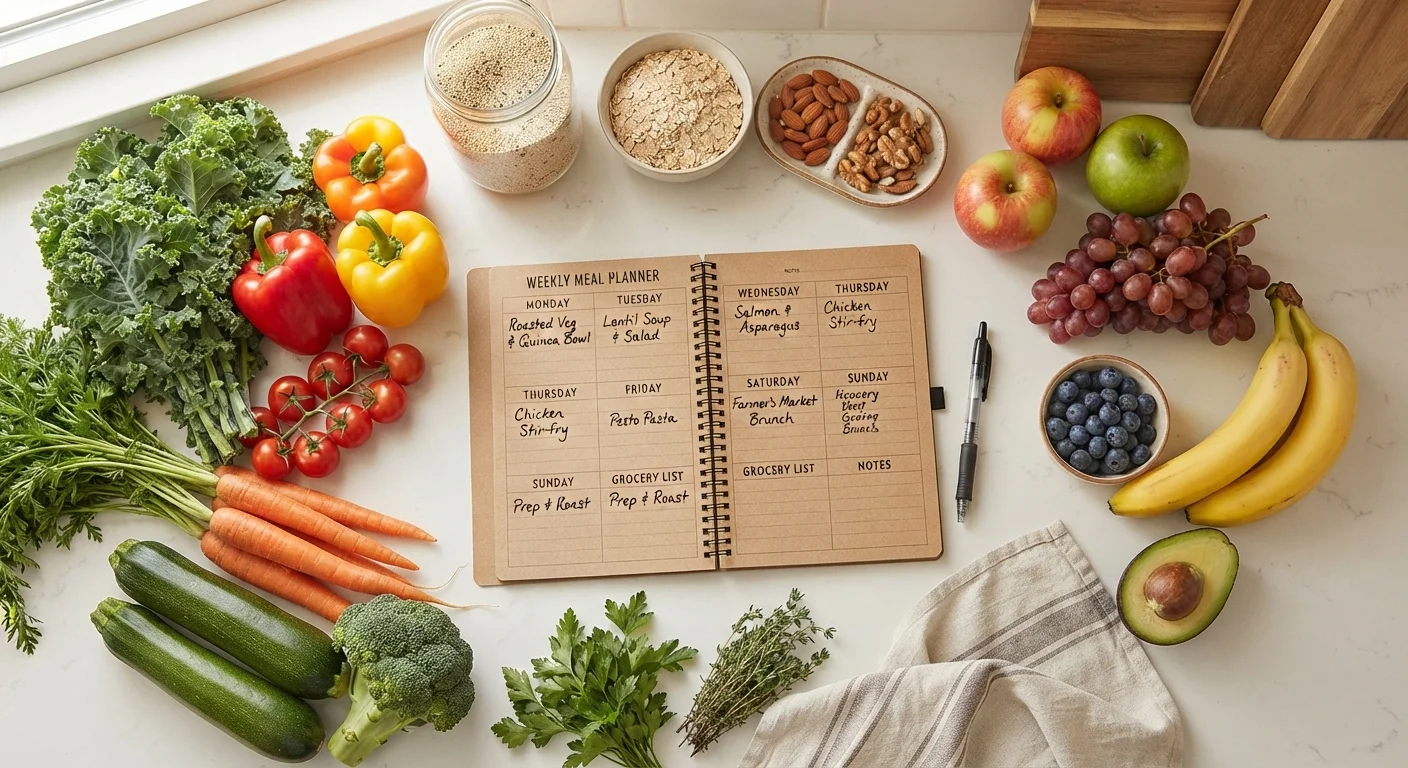
A weekly meal pattern sidesteps this by front-loading decisions. The goal isn't a rigid script — Tuesday is always pasta — but a repeatable structure that reduces the daily question of "what should I eat?" to a much smaller set of choices. Think of it as a loose framework, not a meal plan printed in ink.
For context on how timing layers into this challenge, see what the research actually says about meal frequency.
The Core Practices That Make Patterns Stick
Below are the principles that distinguish sustainable meal routines from short-lived efforts. These aren't rules to follow perfectly — they're levers to pull based on what fits your life.
Build your week around meal templates, not specific recipes
Templates — such as "grain bowl night" or "sheet-pan protein with vegetables" — allow infinite variation within a predictable structure. This prevents menu fatigue while keeping planning effort low. You choose the specific ingredients at purchase, not at dinnertime.
Batch-cook two or three core ingredients each weekend
Having cooked grains, a roasted or poached protein, and prepped vegetables in the refrigerator turns weeknight meals into assembly rather than cooking. This dramatically lowers the activation energy required to eat well on busy evenings.
Assign loose themes by day rather than exact menus
Day-level themes (e.g., meatless Monday, fish on Wednesday) reduce daily decision-making without locking you into a specific dish. They also naturally promote variety across the week, which supports a broader range of nutrients.
Plan one intentionally simple meal per day
Expecting every meal to be balanced, varied, and freshly prepared is unsustainable for most schedules. Building in one genuinely easy option — yogurt and fruit, a sandwich, canned soup with added vegetables — releases pressure and reduces the chance of abandoning the pattern entirely.
Do a weekly five-minute pantry and fridge audit before shopping
Many meal plans collapse not from poor intention but from poor inventory awareness — buying duplicates, missing key ingredients, or letting fresh produce expire. A brief weekly scan aligns your planned pattern with what you actually have.
Quick Actions You Can Take This Week
You don't need to overhaul your entire approach at once. Applying even one of the following actions can meaningfully reduce friction and improve eating quality within days.
One underestimated downstream step is the grocery trip itself. A solid weekly pattern only holds if your cart matches your intentions — explore where nutrition goals commonly break down at the store for practical guidance.
Staying Flexible Without Losing the Pattern
The biggest enemy of a meal pattern isn't a bad week — it's treating one bad week as proof the system failed. Building flexibility directly into your structure prevents this. Reserve one or two evenings per week as intentional "free nights" — takeout, leftovers, or whatever is easy. This makes the pattern sustainable rather than a source of pressure.
“Dietary patterns — not individual foods or meals — are what shape long-term health outcomes. Consistency and variety over weeks and months matter far more than any single nutritional choice.”
— Walter Willett, Professor of Epidemiology and Nutrition, Harvard T.H. Chan School of Public Health
Nutritional variety across the full week also matters more than optimizing every meal. If Monday's dinner was light on vegetables, Tuesday's can compensate. Thinking in weekly totals rather than per-meal perfection is both more realistic and more aligned with how the body uses nutrients over time.
If you're also working on structuring other healthy habits, building a weekly exercise routine follows similar design principles — small structure, built-in flexibility, and gradual habit formation.
This article provides general nutrition information for educational purposes and is not a substitute for personalized dietary advice. For guidance tailored to your health needs, consult a registered dietitian or qualified healthcare professional.
The content on this site is for informational purposes only and is not a substitute for professional advice. Always consult a qualified professional for guidance specific to your situation.